Drilling Fluid Jet Mixer: The Ultimate Guide to Efficient Mud Mixing

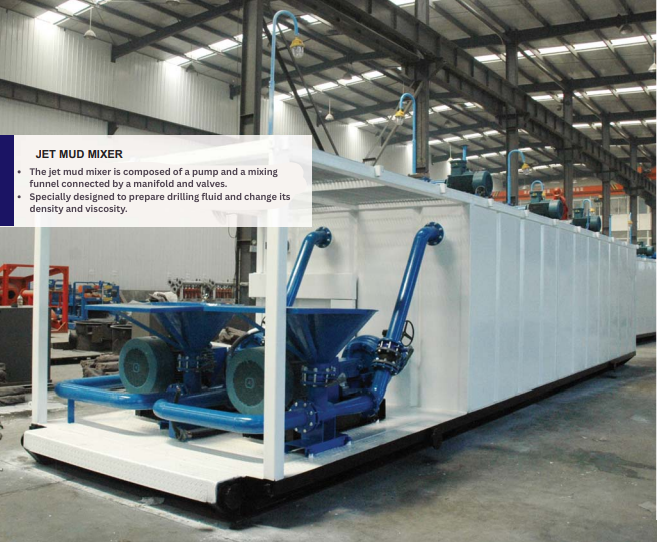
The Drilling Fluid Jet Mixer is a mud mixing funnel designed using the Venturi principle. Also known as a Venturi drilling mud mixing hopper, its main components include a nozzle, mixing chamber, Venturi tube, feeding hopper, butterfly valve, and sand pump or shear pump. The drilling mud mixing hopper is widely used in oil drilling, solids control, trenchless construction, and other applications. It mainly helps operators prepare drilling fluid and adjust key properties such as density, viscosity, and water loss. It is one of the specialized oilfield equipment for weighting drilling fluid. The jet mud mixer is equipped with sand pumps and pipelines to form a jet mixing device. KOSUN offers high-performance drilling mud mixing hoppers engineered for efficient mud preparation and conditioning.
Working Principle of Drilling Fluid Jet Mixer

After the nozzle ejects the liquid, the liquid flows through the mixing chamber and enters the shear tube. Add the material to the mixing chamber through the funnel. The nozzle-driven liquid flow then carries the material into the shear tube, where the material disperses and mixes with the liquid. The liquid flows out of the shear tube and enters the circulation tank.

The shear tube is a hollow tube that gradually expands according to a certain curved surface. Its main function is to increase the shear force of the liquid inside the tube, which helps disperse the material more effectively. The mixed liquid then flows into the circulation tank.

The shear tube actually uses the Bernoulli effect of “fast flow, low pressure; slow flow, high pressure.” Because the nozzle sprays the liquid from the mixing chamber at high speed, the pressure drops as the liquid exits the nozzle. When the liquid enters the shear tube, the cross-sectional area gradually increases, reducing the flow velocity and increasing the pressure.

KOSUN Drilling Fluid Jet Mixer are engineered with precision components to ensure optimal mixing efficiency and consistent fluid properties.

Installation of Drilling Mud Mixing Hoppers

After mixing, the drilling fluid creates significant pressure loss. Therefore, it should discharge the mixed drilling fluid directly into the drilling fluid tank. Install the hopper on top of the drilling fluid tank, or at another elevated position, to allow the mixed drilling fluid to flow directly into the tank without requiring it to climb.

When installing the drilling mud mixing hopper at an elevated position, use a hoist or cantilever crane to lift the drilling fluid materials to the hopper.

When installing the drilling mud mixing hopper at a low position, design a suitable climbing angle and connect the outlet directly to the drilling fluid tank. This configuration helps prevent drilling fluid from overflowing from the funnel.

The Drilling Fluid Jet Mixer typically uses an electric mixing pump for direct drive. If the mixing effect is poor, adjust the distance between the hopper nozzle and the outlet end to achieve optimal mixing performance.

Conclusion

The Drilling Fluid Jet Mixer is an essential component of modern solids control systems, enabling precise control of drilling fluid properties through efficient mixing and shearing. By understanding its working principle and proper installation practices, operators can maximize mixing efficiency and maintain optimal drilling fluid performance. KOSUN provides reliable drilling mud mixing hoppers designed for long-lasting performance in demanding drilling environments.
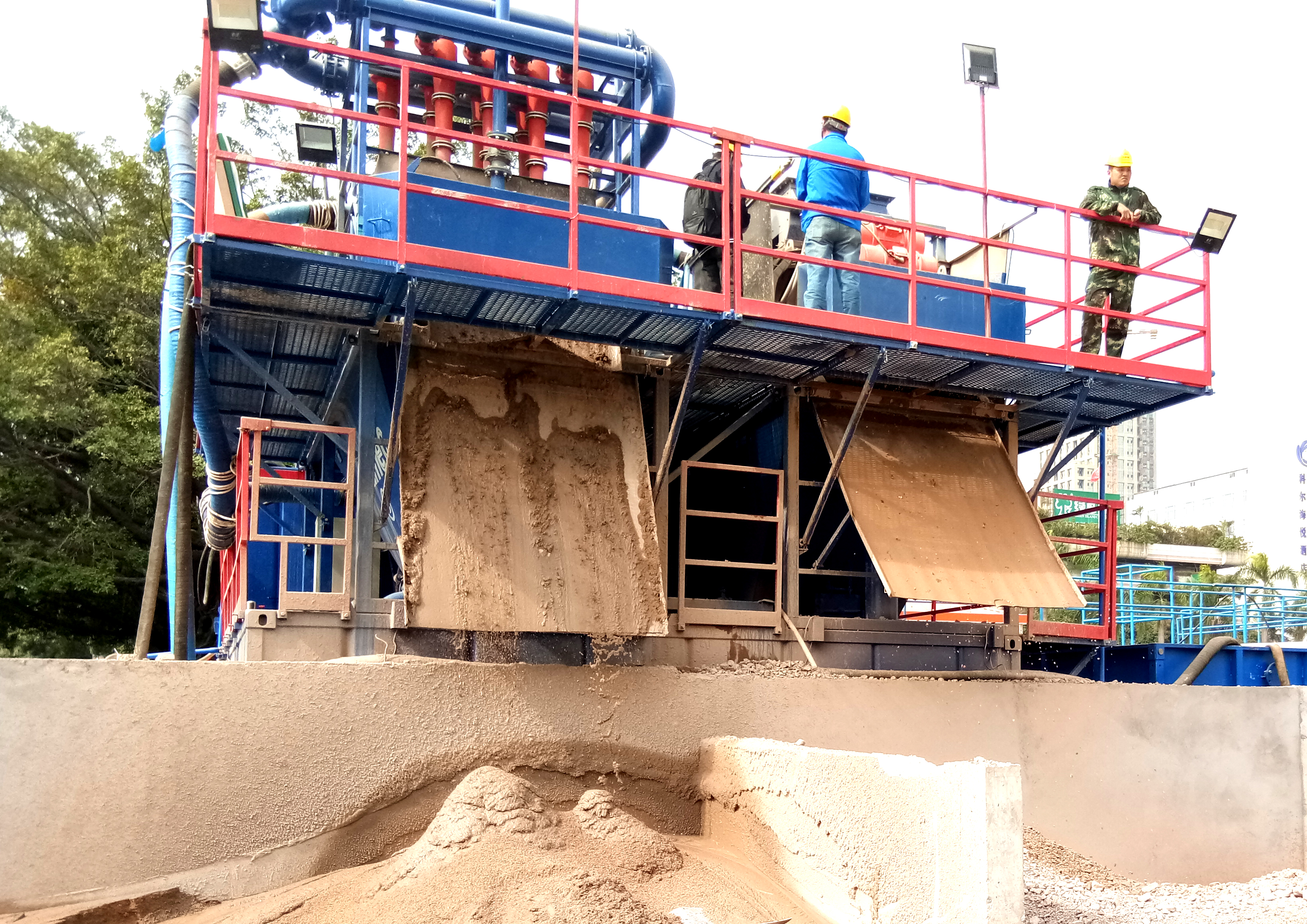
Slurry Separation Plant: Essential Solutions for TBM Tunnel Efficiency

The Importance of Slurry Separation Plants for Tunnel Boring Machines

Tunnel construction has become an essential aspect of modern infrastructure development, allowing for the creation of subways, highways, and utility tunnels without disrupting surface activities. A critical component of this process is the Tunnel Boring Machine (TBM), which excavates tunnels through various geological conditions. One of the significant challenges faced during tunneling operations is the management of excavated material, commonly referred to as slurry. This is where a slurry separation plant comes into play, playing a vital role in the efficient and environmentally responsible management of excavated materials.

A slurry separation plant is designed to process the mixture of soil, rock, and water produced by the TBM during excavation. The slurry is typically used in conjunction with Earth Pressure Balance (EPB) TBMs or slurry shield TBMs. These machines use the slurry to maintain pressure at the tunnel face, counteract groundwater ingress, and transport excavated material away from the machine. However, to continue efficient tunneling operations, the slurry must be treated and reused. KOSUN offers advanced slurry separation plants engineered for high-performance TBM operations.

How a Slurry Separation Plant Works

Screening involves passing the slurry through screens that filter out larger particles. The remaining slurry then moves to settling tanks, where sedimentation occurs. In this phase, the heavier solids settle at the bottom of the tank, forming sludge that operators can dispose of or process further. Meanwhile, the system collects clarified water from the top and reuses it in subsequent tunneling operations.

Treatment systems may also use filtration processes, especially when finer particles require separation from the water. Advanced filtration systems, such as membrane filters, can achieve a high level of purity, ensuring that the recycled water meets the required standards for reuse. Companies can manage treated solid waste in several ways, depending on its composition, including stabilization, recycling, or safe disposal according to local regulations.

Benefits of a Slurry Separation Plant

The benefits of implementing a slurry separation plant in tandem with TBM operations are manifold.

Firstly, the recycling of water significantly reduces the demand for fresh water sources, which is particularly beneficial in regions where water scarcity is a concern. Secondly, effective handling of excavated materials minimizes the risk of environmental contamination and adheres to strict regulations concerning soil and water quality. Additionally, the efficient management of slurry can lead to cost savings in disposal fees and reduce the environmental footprint of construction activities.

Moreover, the use of a slurry separation plant enhances the operational efficiency of TBM-related projects. By allowing for a continuous and automated treatment process, these plants can keep up with the high rate of excavation, reducing downtime and improving productivity. As the global focus on sustainable development intensifies, the construction industry finds itself compelled to adopt cleaner technologies and methods. Slurry separation plants represent a forward-thinking approach to resource management, aligning with broader environmental goals.

KOSUN equips its slurry separation plants with advanced automation and high-efficiency separation technologies to maximize water recovery and minimize waste.

Conclusion

In conclusion, a slurry separation plant is integral to the successful operation of tunnel boring machines. It provides an effective solution to manage excavated materials, highlights the importance of recycling, and contributes to the sustainability of tunneling projects. As infrastructure development continues to grow, the role of these plants will become increasingly crucial, ensuring that the construction industry adheres to environmental standards while meeting the demands of modern society. The evolution and improvement of slurry separation technology will undoubtedly play a significant part in shaping the future of underground construction. KOSUN provides high-performance slurry separation plants and expert support, helping customers achieve their operational and environmental goals.

Best Practices for Operating Oilfield Mud Cleaning Equipment

Deep-well drilling requires precise surface fluid management. As drilling mud circulates through the wellbore, it returns carrying drilled solids, reactive clays, and abrasive sands. While shale shakers remove large cuttings, fine and ultra-fine particles often remain in the system. Mud cleaning equipment provides the secondary purification needed to remove these contaminants and maintain optimal mud performance.

Proper operation requires balancing fine-particle removal with the preservation of valuable drilling fluids and weighting materials. When managed correctly, mud cleaning equipment prevents the buildup of abrasive solids that accelerate wear on downhole tools, damage mud pumps, and reduce drilling efficiency.

Technical Performance of Mud Cleaning Equipment

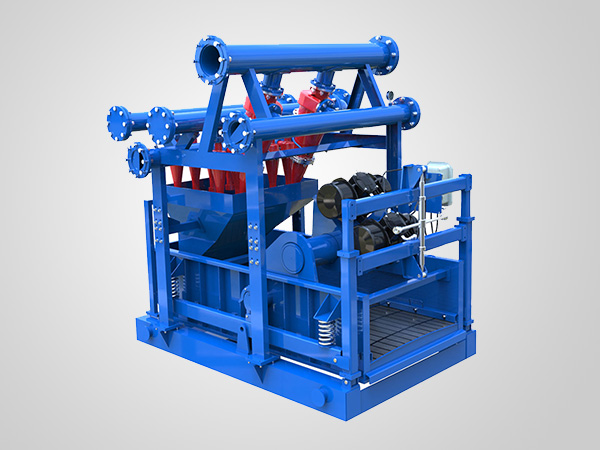
Modern mud cleaning equipment combines hydrocyclones with a high-frequency vibrating screen to provide efficient secondary solids control while minimizing equipment footprint.

Drilling mud is pumped into hydrocyclones, where centrifugal force separates heavier solids from the fluid. Clean mud exits through the vortex finder and returns to the active system, while concentrated solids discharge onto fine-mesh screens for final separation. This two-stage process effectively removes harmful sand and silt while retaining valuable weighting agents such as barite.

Optimizing Throughput Capacity

Peak performance depends on maintaining stable feed pressure throughout the system. Treating the mud cleaner as part of an integrated solids control process—not as a standalone unit—is essential.

Low feed pressure weakens the cyclone vortex, allowing unprocessed slurry to overload the screen panels, reducing efficiency and increasing mud losses. Excessive pressure creates turbulence that carries fine solids back into the clean mud stream. Maintaining a consistent, calibrated feed rate ensures efficient separation and reliable system performance.

Preventive Maintenance

Hydrocyclones operate under continuous abrasive conditions and require routine inspection to maintain separation efficiency.

Operators should regularly inspect cone interiors for wear, erosion, and inlet blockages that disrupt flow patterns. The discharge apex should produce a hollow umbrella-shaped spray. A thick, solid discharge, known as “roping,” indicates an overloaded or plugged cone that requires immediate cleaning to prevent screen damage and reduced performance.

Maintaining Structural Stability

The vibrating screen basket plays a critical role in equipment performance and screen life. A heavy-duty frame evenly distributes high G-forces, reducing structural stress and minimizing vibration.

Screen panels must be properly tensioned and fully supported to prevent premature mesh failure. Maintaining the correct deck angle and selecting the appropriate screen mesh for formation conditions improves solids removal, extends screen life, minimizes fluid loss, and supports efficient closed-loop mud recycling.

Conclusion

Mud cleaning equipment is essential for advanced drilling fluid purification. By maintaining stable operating conditions, optimizing feed pressure, performing regular hydrocyclone maintenance, and ensuring proper screen installation, operators can maximize separation efficiency, reduce equipment wear, minimize downtime, and improve overall drilling performance.

As a leading manufacturer of drilling solids control equipment, KOSUN Machinery delivers reliable, high-performance mud cleaning solutions. These solutions help oilfield operators improve operational efficiency, reduce environmental impact, and achieve safer, more cost-effective drilling operations.

What is the newest technology in drilling waste treatment?

The main components of the drilling waste are cuttings, excess drilling fluids, hydrocarbons and water and are mostly categorized as hazardous waste. The disposal of these wastes are, in most locations around the world, highly regulated. The solids in the drill cuttings are usually separated and the cleaned off drill mud residue, as well as the produced water are usually cleaned at considerable costs.(drilling waste treatment)

drilling waste treatment equipment

The first step in managing drilling wastes is to separate the solid cuttings from the liquid drilling mud. Once solid and liquid drilling wastes have been separated, companies can use a variety of technologies and practices to manage the wastes. For some applications, drilling wastes are solidified or stabilized prior to their ultimate management practice. The management technologies and practices can be grouped into three major categories: waste minimization, recycle/reuse, and disposal.

The Following information is more about the drilling waste treatment equipment

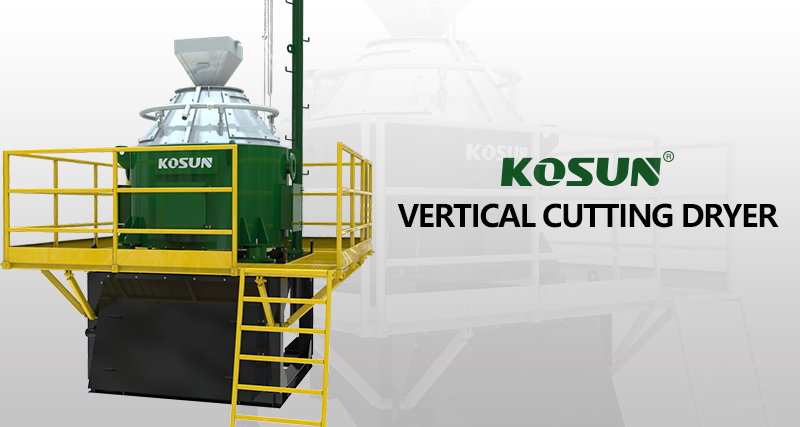
Vertical Cuttings Dryer( Vertical Centrifuge) can perform solid/liquid separation through centrifugal separation. The vertical cuttings dryer can effectively recover the liquid phase in drilling cuttings, making the solid phase become very dry. It is suitable for water-base mud, oil-base mud and synthetic base mud. By recovering the mud in drilling cuttings, the vertical cuttings dryer can reduce the drilling cost and cut down environmental pollution. With handling capacity of 40-60 T/h, the oil on cuttings (OOC) of drilling cuttings can be reduced to lower than 5% (w/w) after treatment, meeting the international emissions standards and environmental protection requirements. The vertical centrifuge can also be applicable for drilling waste management in onshore and offshore drilling.

-DC Series Decanter Centrifuge is used in separating suspension of solids phase with particle ≥2μm in diameter for drilling mud and fluids handling.

-Screw Pump is an ideal pump used to feed drilling fluids to decanter centrifuge since drilling fluids is pushed to proceed along axial direction evenly. Therefore, the inner flow speed is kept low, volume unchanged and pressure stable so that vortex and agitation are prevented. Screw Pump is useful for wet mud drilling mud waste management and cuttings transportation.

Screw conveyor (Auger) can be used in drilling waste management projects, providing an effective and low-cost drilling cuttings transport system for offshore and onshore drilling rigs. Adopting a multi-sectional composite structure with each section of 12 feet (3.66m), the screw conveyor can be flexibly assembled on different drilling sites, with characteristics of simple operation, stable structure, strong adaptability and high safety, significantly improving the operating efficiency of equipment and reducing the cost and resources. The flights of screw conveyer adopt wear-resistant material to ensure its service life.

Hi-G Dryer is used to recover the mud from drilling cuttings,so as to reduce the liquid/oil content in drilling cuttings to as low as about 10%(w/w) and recover part of the drilling mud,so that the drilling cost can be reduced and the drilling waste volume can be cut down,for the purpose of reducing environmental pollution.The Hi-G dryer suitable for both of WBM and OBM.

Cutting Dryer very Popular all over the World

Cutting Dryer

Vertical cuttings dryer use the centrifugal force to separate the oil from the drilling cuttings generated during oil extraction process from an oil well. The drilling cuttings are the waste product generated in large volume in drilling operations.
They are gaining popularity worldwide due to their capacity to separate oil from the solid waste that could be measured as ROC (retained oil on cuttings) or OOC (oil on cuttings). They are said to recover as much as 15% of the volume of the total waste. This not only saves the environmental damage but results into unintended loss of oil and economy of operations.

cutting dryer
cutting dryer

The way a vertical cutting dryer works could be understood in these simple steps –
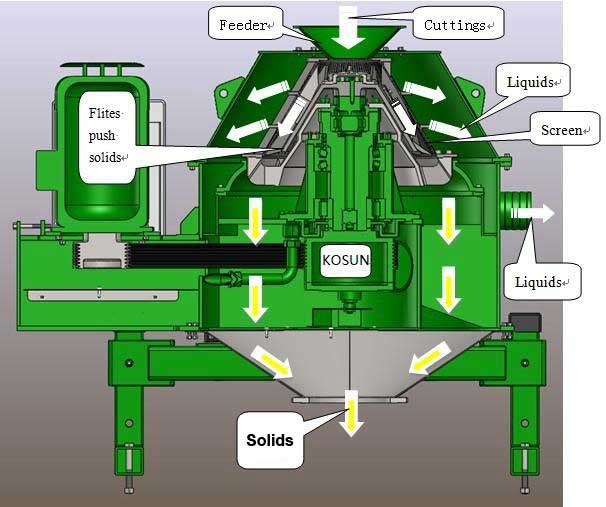
A.    The drilling waste is churned using centrifugal force generated by mechanical rotation that results into separating of oil from solid.
B.    The drilling cutting generated solid waste is eliminated using sieve basket and scrapper.
C.    The liquid thus extracted is carried through pipes to a separate tank for further treatment and solid remains in the basket
D.    Then the dried solid waste is discharge to a separate container for further disposal.
The drill cuttings thus separated by cutting dryer from drilling liquid forms large part of the drilling waste and needs to be disposed off safely to prevent the contamination of environment.
Drilling waste treatment was not given much importance in earlier period when drilling operations came into existence but the scenario changed rapidly off late beginning early 1980s in wake of damaging impact of un-thoughtful disposal methods used by companies. The oil and gas industry has become more aware of their responsibility toward the environmental wellbeing thanks to number of protests by local people where such damages were evident and intervened by regulatory authorities thereafter.
Since then the technological advancement has played significant role in improving the drilling operations and their environmental footprints. Vertical Cutting Dryers are one such significant development in that direction.

Vertical Cutting Dryer for Oil Base Mud of Kosun Manufacturer

Vertical Cutting Dryer

Oil Base Muds (OBMs) came into general use in the oil field in early 1950s. These oil base mud aid the process of drilling by providing the much needed lubrication for the equipments without damaging the reservoir that they are drilling into.

The use of vertical cuttings dryer with oil base mud drill cuttings is done to treat them. They are usually deployed with high speed centrifugal equipment to get best performance.

vertical cutting dryer

There is variety of combinations available in the market for treating only oil base mud or only synthetic base mud or both or along with water base mud as well.
The Oil base mud is used to reduce friction between drill pipe and formation. Operators also have the benefit of non-aqueous drilling fluids coupled with technology that help manage cuttings and excess oil and synthetic base mud.

In ensuring the environmental regulations, depending upon the local legislations, this becomes more helpful to pay extra attention to get rid of toxicity the drilling cutting waste endangers. The major benefit is that it’s not only efficient in reducing the environmental risk but also improving the profitability for the operators.

Ion any drilling project, operators must achieve a good balance between minimizing environmental impact, maintaining the drill stability and maximizing its efficiency. The use of non-aqueous fluid, both oil base mud and synthetic base mud, has increased substantially in the industry off late, owing primarily to the inherent inhibitive and lubricate qualities of these fluids coupled with the benefits of vertical cutting dryer in managing the drilling waste.

As the environmental discharge regulations get stricter, it is all the more important for operators to embrace technologies like these. A vertical cutting dryer performs that task for the operators and that too at economy. A surface solid control equipment is more efficient in dealing with larger cuttings and the dilution volume required to reduce fine solid content in the drilling fluid is reduced. Ultimately the total waste volume is significantly reduced.

Cutting Dryer-Centrifuge For Drillng Waste Management

Cutting Dryer

Cutting dryer of Kosun is a well-known brands in China. It has 25 years of history in solids control.

Cutting dryer is also a kind of centrifuge which is used for solid and liquid
separation through centrifugal separation. Cuttings dryer have been proven to be one of the most effective waste management equipment for oil-based or synthetic drilling operations.

Cutting Dryer
Cutting Dryer

Centrifuge is the use of centrifugal force, separation of liquid and solid particles or liquid and liquid mixture of the components of the mechanical. The centrifuge is mainly used to separate the solid particles in the suspension from the liquid or to separate the two different densities and incompatible liquids (eg, to separate the cream from the milk) in the emulsion;

It can also be used to exclude Wet solids in the liquid, such as washing clothes with wet clothes; special ultra-speed tube separator can also be separated from different density of gas mixture; the use of different density or particle size of solid particles in the liquid settling speed of different characteristics, some settlement The centrifuge can also classify the solid particles by density or particle size.

Why  this centrifuge is so popular?
It contain below reseasons:
1. Highly effective separation liquids/solids
2. Minimizes fluid content of cuttings
3. Decease waste-disposal volumes
4. Meet various operation requirements
5. Ease to maintence.
6. Improved efficiency and lower costs
7. Lowere cost because lower waste volumes.

Vertical cutting dryer of Kosun has more than 25 years old in solid control industry.  Kosun concluded much more experience in drilling waste.

With years marketing experience, KOSUN have been expanded its market globally, and have been established the friendly partnership with GAZPROM, PEMEX, AVA, SOCAR, SAE, etc.

As a leader in China’s solid control and drilling waste management industry, Kosun has been highly valued by its local customers for its high quality products and quality service. Branch letter will continue to provide customers with better products and services.