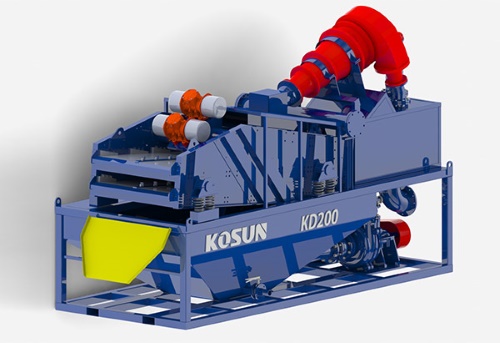
Key Factors Affecting Drilling Fluid Vibrating Screen Efficiency

During oil drilling, drilling fluid is transported to the mud control system by mud pumps. As the first processing equipment, the drilling fluid vibrating screen plays a key role in solid-liquid separation due to its early separation time, fast processing speed, and economic efficiency. The working efficiency of the vibrating screen directly determines the processing capacity of the entire mud control system. Therefore, it is crucial to identify the main factors affecting its efficiency. These factors fall into three categories.
Vibration Mode

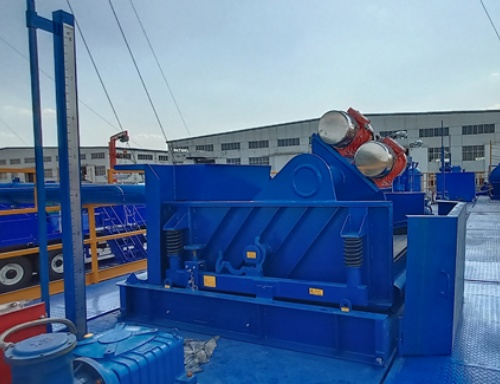
The vibration modes of vibrating screens mainly include three types: linear motion, circular motion, and elliptical motion. The position of the vibrator’s center of gravity determines the vibration mode.

When the center of gravity is located within the vibrator itself, the equipment generates circular motion. If the center of gravity is above the vibrator, elliptical motion forms. Such motion needs to rely on the screen slope to transport drill cuttings, but it will, to some extent, reduce processing capacity. When the center of gravity is above the vibrator and slightly forward, the vibrating screen moves in a straight line. This mode can maintain a stable drilling cuttings conveying speed.

Amplitude and Frequency

Amplitude, vibration mode, and the rotational speed of the vibrating motor jointly determine the processing capacity of the vibrating screen. Among these, motor speed directly affects vibration frequency. The higher the frequency, the better the general solid-phase separation effect. For instance, the vibration frequency of domestic high-frequency vibrating screens is mostly maintained at around 2,000 times per minute.

Amplitude refers to the vertical movement distance of the vibrating screen , jointly determined by vibration mass and eccentricity. Vibration intensity is reflected in the centrifugal acceleration generated by the vibrator, indicating the force exerted by the screen on solid particles. Theoretically, increasing amplitude can enhance the processing effect. However, it also leads to increased force on the equipment, potentially shortening service life. Therefore, in both design and practical application, operators must balance performance and durability.

Mesh Count and Material of the Screen

Generally, shale vibrating screens are equipped with 2 to 4 layers of screens. Drilling fluid passes through each layer in sequence for classification treatment. Improper selection of mesh size or screen damage significantly reduces solid-phase separation efficiency. In addition, improper installation can cause the screen to wear out or tear prematurely. Therefore, when choosing a screen, it is essential to consider its material properties and installation quality to ensure continuous and stable equipment operation.

The Advantages of KOSUN Vibrating Screens

The vibrating screens manufactured by Xi’an KOSUN Machinery have significant advantages in oil drilling.

Firstly, modular design and high-precision processing techniques ensure smooth and reliable equipment operation.

Secondly, they offer multiple adjustable vibration modes , adapting to different formation conditions and drilling requirements.

Thirdly, high-quality motors and shock absorption systems ensure high-frequency vibrating screening efficiency while extending equipment service life.

Finally, high-strength composite screen mesh materials combined with scientific structural design significantly enhance screen durability and processing efficiency, providing customers with an economical and efficient all-around solids control solution.

Conclusion

The efficiency of a drilling fluid vibrating screen depends on three main factors: vibration mode, amplitude and frequency, and screen mesh count and material. By understanding these factors and choosing high-quality vibrating screens like those from KOSUN, with modular design, adjustable vibration modes, quality motors, and composite screens, operators can maximize solids control efficiency, reduce downtime, and lower overall drilling costs.
How to Remove Oil Tank Sludge: Effective Treatment Solutions Explained

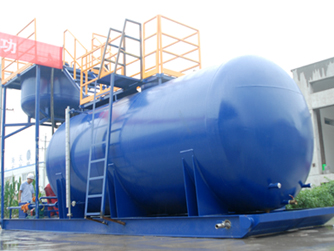
Oil tank sludge is a common problem. It refers to the accumulation of sediment and other impurities at the bottom of an oil tank. Over time, the sludge can become quite thick, impacting the tank’s effectiveness and the quality of the oil it holds. Therefore, it is important to implement proper oil tank sludge treatment to prevent accumulation and improve overall tank efficiency.

oil tank

How Is Oil Tank Sludge Formed?

Sludge forms when oil is left standing in a tank for an extended period. This causes the oil to separate, with heavier components sinking to the bottom. As the sludge builds up, it can reduce usable space within the tank and increase the risk of corrosion. Furthermore, if the sludge is not treated, it can eventually lead to tank failure and oil spills, which have a significant environmental impact.

Prevention and Inspection

To prevent sludge accumulation, oil tanks should be regularly inspected and cleaned. This can involve draining the tank, removing sediment and impurities, and refilling with fresh oil. However, this process can be time-consuming, expensive, and result in significant downtime. Therefore, an effective oil tank sludge treatment process is essential.

Chemical Cleaning

One common approach to treating oil tank sludge is using chemical agents to break down the sludge into smaller particles for removal. This process, known as chemical cleaning , involves adding a chemical mixture to the tank. The chemicals react with the sludge, breaking it down so it can be pumped out. While this process is effective, it can be costly, and the chemicals used may be harmful to the environment.

Mechanical Cleaning

Another approach to treating oil tank sludge is using mechanical methods. This involves specialized equipment to remove sludge from the bottom of the tank. One common technique is vacuum cleaning , which uses a vacuum truck to remove the sludge. Although this method is effective, it can be time-consuming, and the tank may need to be taken out of service during cleaning.

Bioremediation

A newer approach to the sludge treatment involves the use of biological agents. These agents are specifically designed to break down sludge without harsh chemicals or mechanical cleaning. This process, known as bioremediation , introduces bacteria into the tank that consume the sludge, turning it into harmless by-products. Therefore, this method is environmentally friendly and can be an effective alternative to traditional treatment methods.

Conclusion

Sludge treatment in tanks is an essential process. Sludge buildup can impact tank efficiency and lead to costly repairs and environmental damage. Therefore, it is crucial to have an effective treatment process in place, whether chemical cleaning, mechanical cleaning, or bioremediation. Each method has its advantages and disadvantages, and the appropriate choice depends on facility requirements. However, with proper maintenance and treatment, sludge accumulation can be minimized, and tank efficiency and longevity can be greatly improved.

Technical Advantages of KD-200 Slurry Treatment System

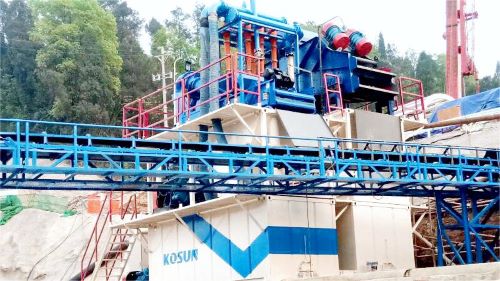
The KD-200 Slurry Treatment System resolves space limits and long teardown cycles for small-to-medium slurry balance shield projects. It delivers high-efficiency, real-time purification within a very tight structural footprint. As municipal pipeline construction extends into dense urban zones, traditional large multi-tank plants become impossible to deploy due to site constraints. Therefore, this KD-200 Slurry Treatment System utilizes a containerized assembly process. It integrates a scalping shaker, hydrocyclone classification manifolds, feed pumps, and storage tanks onto a single steel skid base, providing a low-consumption, highly mobile fluid recovery solution for modern trenchless projects.KD Slurry Treatment System

Process Workflows and Staged Separation of the KD-200 Slurry Treatment System

Although the system features a highly condensed structure, the internal fluid dynamics chain remains extremely strict. This design allows the KD-200 Slurry Treatment System to maintain a massive instantaneous throughput within a minimized space:
  • Primary Screening and Interception: Raw high-viscosity slurry returning from the tunnel face first flows across a large-area scalping shaker. This stage rapidly extracts large stones and cohesive muck blocks.
  • Secondary Desanding and Centrifugal Classification: Next, a heavy-duty centrifugal pump injects the filtered fluid into the desanding module. Equipped with a large-diameter hydrocyclone, this module uses a high-acceleration centrifugal field to separate coarse sand solids quickly.
  • Tertiary Desilting and Colloidal Removal: To prevent ultra-fine abrasive particles from eroding the shield thrusters and downstream high-pressure pumps, the fluid enters a fine desilter split-manifold assembly. This multi-cone configuration performs deep micro-particle separation to polish the active mud.
    Slurry treatment system

Flexible Regulation for Diverse Geological Formations

Urban geological strata exhibit high unpredictability. To satisfy the material balance requirements of different formations, such as high-plasticity clay or heavy gravel layers, the KD-200 Slurry Treatment System provides strong adjustable flexibility. Operators can tune the vibrating screen excitation force, screen deck angle, and mesh size in real time during continuous drilling operations.
By matching different D50 cut points, the setup adapts dynamically to various processing tasks, minimizing non-productive maintenance downtime. Furthermore, the overall power design remains highly conservative. This remote solution integrates seamlessly with local municipal grids or matches onboard generator sets in remote tunneling sectors.

Conclusion

Modern environmental regulations transform fluid processing from simple single-stage screening into a highly flexible control unit. Implementing this containerized, rapid-deployment KD Slurry Treatment System provides international contractors with an essential tool to optimize operational expenditure (OPEX) while securing strict environmental compliance.