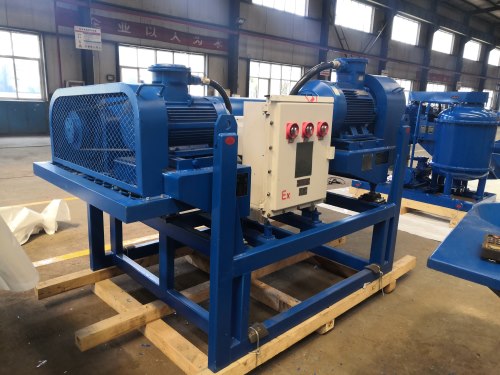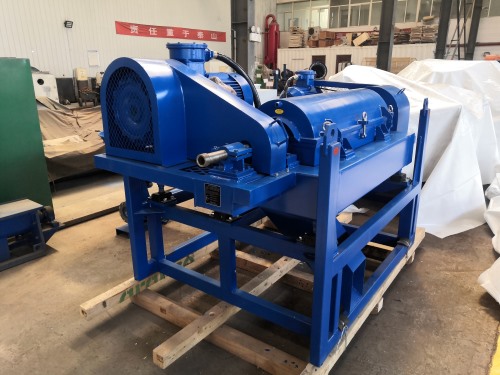
Mud management directly affects drilling speed and compliance costs on modern jobsites, making an efficient HDD mud recycling system an absolute necessity. Raw mud returning from underground contains large, hard cuttings, while exhibiting high viscosity, easy segregation, and highly variable properties. Without proper purification equipment, crews must dig temporary mud pits or haul away liquid waste.
These crude methods create three major industry pain points in narrow urban zones: high fluid chemical costs trim project profits, large solids control equipment cannot fit into restricted spaces, and operators face immediate shutdown risks from strict environmental audits. Therefore, introducing a compact, integrated setup has become essential for contractors to reduce operational costs. This equipment uses modular integration to control drilling waste at the source and enable real-time fluid reuse.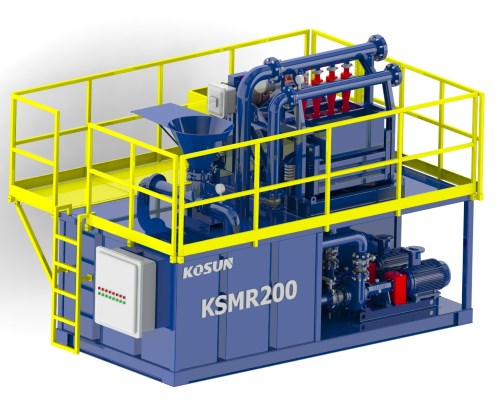
High-Efficiency Advantages of the KSMR-200 HDD Mud Recycling System
To handle the low displacement and highly restricted spaces of small-to-medium trenchless projects, KOSUN developed a flagship solution: the KSMR-200 HDD mud recycling system. As a top-tier performer in fluid separation, this equipment delivers distinctive structural and technical advantages:
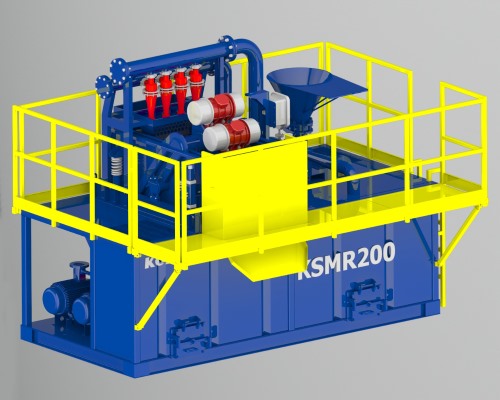
- Ultra-Compact Modular Integration: Traditional mud purification plants are massive and complex. However, the KSMR-200 condenses multiple functions into a highly concentrated package. It integrates mud cleaning, fluid mixing, and safe storage onto a single steel skid base. The compact frame minimizes the total jobsite footprint to under 15 square meters. This lightweight design allows flatbed trucks to transport the whole unit easily, shortening assembly and teardown times.
- Dual-Deck Linear Shale Shaker Line of Defense: The core technology relies on the proprietary LS2·752 dual-deck linear shale shaker. Within a very small installation space, the dual-screen configuration gives the slurry higher linear acceleration and multi-stage classification capabilities. Combined with adjustable high G-force trajectories, it completely prevents fluid loss and severe mesh blinding when processing high-viscosity fluids.
- Micron-Grade High-Precision Purification: Though compact, the system delivers strong fluid dynamics performance. By optimizing hydraulic distribution across the desander and desilter hydrocyclone manifolds, this small HDD mud recycling system maintains a stable processing capacity of up to 50 m³/h. More importantly, it achieves a precise cut point down to 20 microns, extracting harmful fine colloidal solids to prevent excessive wear on downstream high-pressure mud pump fluid ends.
Closed-Loop Ecology and Value Transformation of the HDD Mud Recycling System
Deploying the KSMR-200 HDD mud recycling system shifts trenchless operations from traditional waste disposal to source-controlled closed-loop processing:
- 100% Fluid Recycling with Zero Fresh Water Consumption: The system utilizes a self-balancing closed circuit. The clarified mud flows directly to the mixing system to combine with new chemical additives. The mud pump then routes the fluid back to the drilling rig for continuous reuse, eliminating fresh water consumption during operations.
- Extended Equipment Lifespan and Safety Compliance: All electrical components fully meet international explosion-proof, dust-proof, and rain-proof standards. Critical flow components feature tungsten carbide wear-resistant layers. This heavy-duty engineering ensures stable operations under extreme weather or high sand loads, reducing unplanned jobsite downtime to a minimum.
Conclusion
Instead of focusing on initial purchase costs, industrial fluid processing customers now evaluate total lifecycle costs. A premium HDD mud recycling system that operates efficiently within tight urban footprints provides an essential tool. Ultimately, it helps global drilling companies maximize tunneling efficiency while ensuring strict environmental compliance.