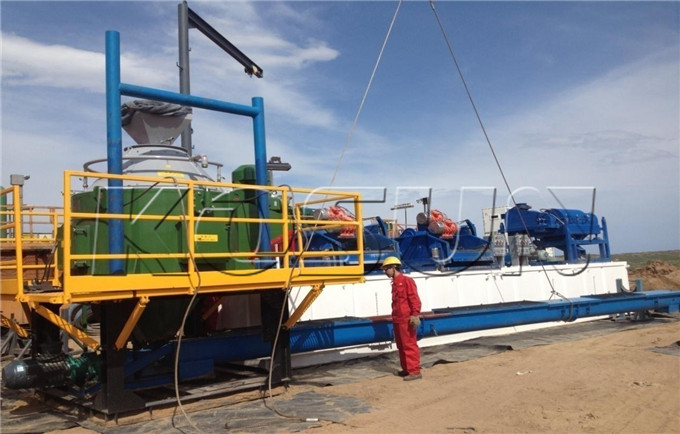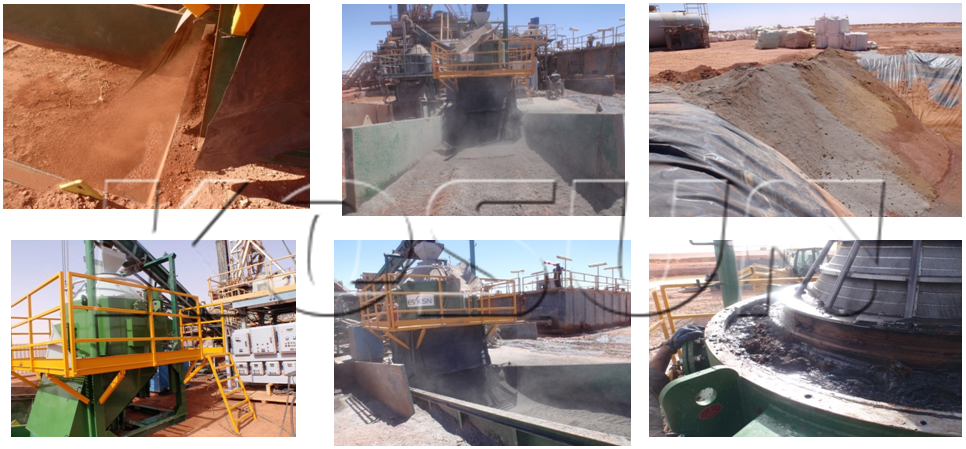
During oil drilling, drilling fluid is transported to the mud control system by mud pumps. As the first processing equipment, the drilling fluid vibrating screen plays a key role in solid-liquid separation due to its early separation time, fast processing speed, and economic efficiency. The working efficiency of the vibrating screen directly determines the processing capacity of the entire mud control system. Therefore, it is crucial to identify the main factors affecting its efficiency. These factors fall into three categories.
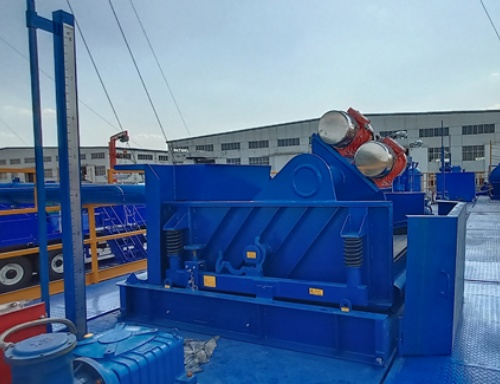
Vibration Mode
The vibration modes of vibrating screens mainly include three types: linear motion, circular motion, and elliptical motion. The position of the vibrator’s center of gravity determines the vibration mode.
When the center of gravity is located within the vibrator itself, the equipment generates circular motion. If the center of gravity is above the vibrator, elliptical motion forms. Such motion needs to rely on the screen slope to transport drill cuttings, but it will, to some extent, reduce processing capacity. When the center of gravity is above the vibrator and slightly forward, the vibrating screen moves in a straight line. This mode can maintain a stable drilling cuttings conveying speed.
Amplitude and Frequency
Amplitude, vibration mode, and the rotational speed of the vibrating motor jointly determine the processing capacity of the vibrating screen. Among these, motor speed directly affects vibration frequency. The higher the frequency, the better the general solid-phase separation effect. For instance, the vibration frequency of domestic high-frequency vibrating screens is mostly maintained at around 2,000 times per minute.
Amplitude refers to the vertical movement distance of the vibrating screen , jointly determined by vibration mass and eccentricity. Vibration intensity is reflected in the centrifugal acceleration generated by the vibrator, indicating the force exerted by the screen on solid particles. Theoretically, increasing amplitude can enhance the processing effect. However, it also leads to increased force on the equipment, potentially shortening service life. Therefore, in both design and practical application, operators must balance performance and durability.
Mesh Count and Material of the Screen
Generally, shale vibrating screens are equipped with 2 to 4 layers of screens. Drilling fluid passes through each layer in sequence for classification treatment. Improper selection of mesh size or screen damage significantly reduces solid-phase separation efficiency. In addition, improper installation can cause the screen to wear out or tear prematurely. Therefore, when choosing a screen, it is essential to consider its material properties and installation quality to ensure continuous and stable equipment operation.
The Advantages of KOSUN Vibrating Screens
The vibrating screens manufactured by Xi’an KOSUN Machinery have significant advantages in oil drilling.
Firstly, modular design and high-precision processing techniques ensure smooth and reliable equipment operation.
Secondly, they offer multiple adjustable vibration modes , adapting to different formation conditions and drilling requirements.
Thirdly, high-quality motors and shock absorption systems ensure high-frequency vibrating screening efficiency while extending equipment service life.
Finally, high-strength composite screen mesh materials combined with scientific structural design significantly enhance screen durability and processing efficiency, providing customers with an economical and efficient all-around solids control solution.
Conclusion
The efficiency of a drilling fluid vibrating screen depends on three main factors: vibration mode, amplitude and frequency, and screen mesh count and material. By understanding these factors and choosing high-quality vibrating screens like those from KOSUN, with modular design, adjustable vibration modes, quality motors, and composite screens, operators can maximize solids control efficiency, reduce downtime, and lower overall drilling costs.