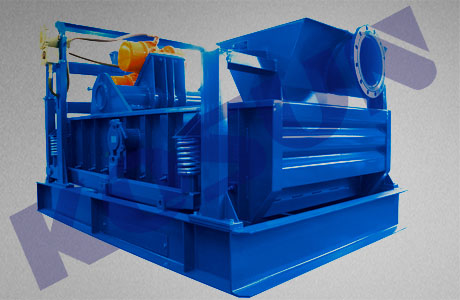
Drilling Fluid Jet Mixer: The Ultimate Guide to Efficient Mud Mixing

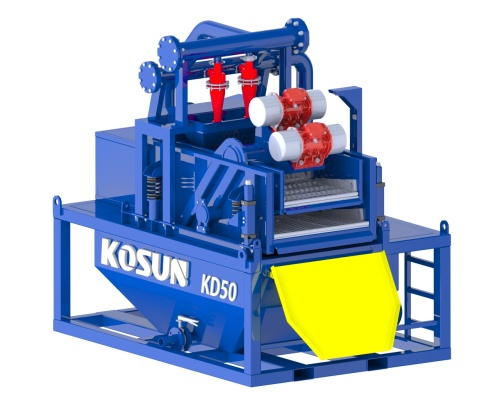
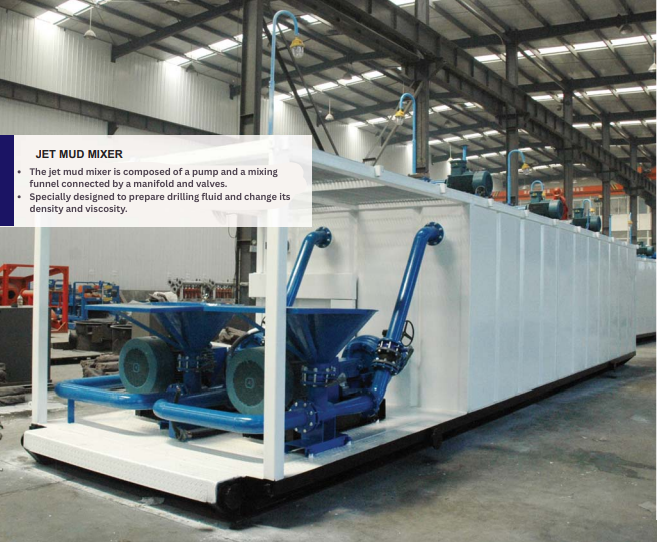
The Drilling Fluid Jet Mixer is a mud mixing funnel designed using the Venturi principle. Also known as a Venturi drilling mud mixing hopper, its main components include a nozzle, mixing chamber, Venturi tube, feeding hopper, butterfly valve, and sand pump or shear pump. The drilling mud mixing hopper is widely used in oil drilling, solids control, trenchless construction, and other applications. It mainly helps operators prepare drilling fluid and adjust key properties such as density, viscosity, and water loss. It is one of the specialized oilfield equipment for weighting drilling fluid. The jet mud mixer is equipped with sand pumps and pipelines to form a jet mixing device. KOSUN offers high-performance drilling mud mixing hoppers engineered for efficient mud preparation and conditioning.
Working Principle of Drilling Fluid Jet Mixer

After the nozzle ejects the liquid, the liquid flows through the mixing chamber and enters the shear tube. Add the material to the mixing chamber through the funnel. The nozzle-driven liquid flow then carries the material into the shear tube, where the material disperses and mixes with the liquid. The liquid flows out of the shear tube and enters the circulation tank.

The shear tube is a hollow tube that gradually expands according to a certain curved surface. Its main function is to increase the shear force of the liquid inside the tube, which helps disperse the material more effectively. The mixed liquid then flows into the circulation tank.

The shear tube actually uses the Bernoulli effect of “fast flow, low pressure; slow flow, high pressure.” Because the nozzle sprays the liquid from the mixing chamber at high speed, the pressure drops as the liquid exits the nozzle. When the liquid enters the shear tube, the cross-sectional area gradually increases, reducing the flow velocity and increasing the pressure.

KOSUN Drilling Fluid Jet Mixer are engineered with precision components to ensure optimal mixing efficiency and consistent fluid properties.

Installation of Drilling Mud Mixing Hoppers

After mixing, the drilling fluid creates significant pressure loss. Therefore, it should discharge the mixed drilling fluid directly into the drilling fluid tank. Install the hopper on top of the drilling fluid tank, or at another elevated position, to allow the mixed drilling fluid to flow directly into the tank without requiring it to climb.

When installing the drilling mud mixing hopper at an elevated position, use a hoist or cantilever crane to lift the drilling fluid materials to the hopper.

When installing the drilling mud mixing hopper at a low position, design a suitable climbing angle and connect the outlet directly to the drilling fluid tank. This configuration helps prevent drilling fluid from overflowing from the funnel.

The Drilling Fluid Jet Mixer typically uses an electric mixing pump for direct drive. If the mixing effect is poor, adjust the distance between the hopper nozzle and the outlet end to achieve optimal mixing performance.

Conclusion

The Drilling Fluid Jet Mixer is an essential component of modern solids control systems, enabling precise control of drilling fluid properties through efficient mixing and shearing. By understanding its working principle and proper installation practices, operators can maximize mixing efficiency and maintain optimal drilling fluid performance. KOSUN provides reliable drilling mud mixing hoppers designed for long-lasting performance in demanding drilling environments.
Slurry Separation Plant: Essential Solutions for TBM Tunnel Efficiency

The Importance of Slurry Separation Plants for Tunnel Boring Machines

Tunnel construction has become an essential aspect of modern infrastructure development, allowing for the creation of subways, highways, and utility tunnels without disrupting surface activities. A critical component of this process is the Tunnel Boring Machine (TBM), which excavates tunnels through various geological conditions. One of the significant challenges faced during tunneling operations is the management of excavated material, commonly referred to as slurry. This is where a slurry separation plant comes into play, playing a vital role in the efficient and environmentally responsible management of excavated materials.

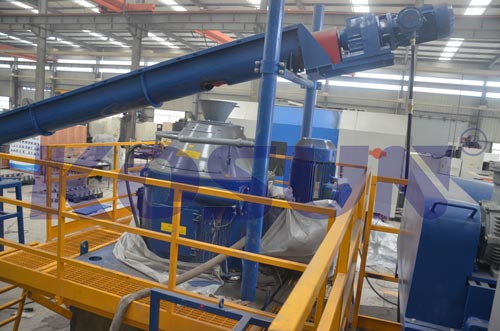
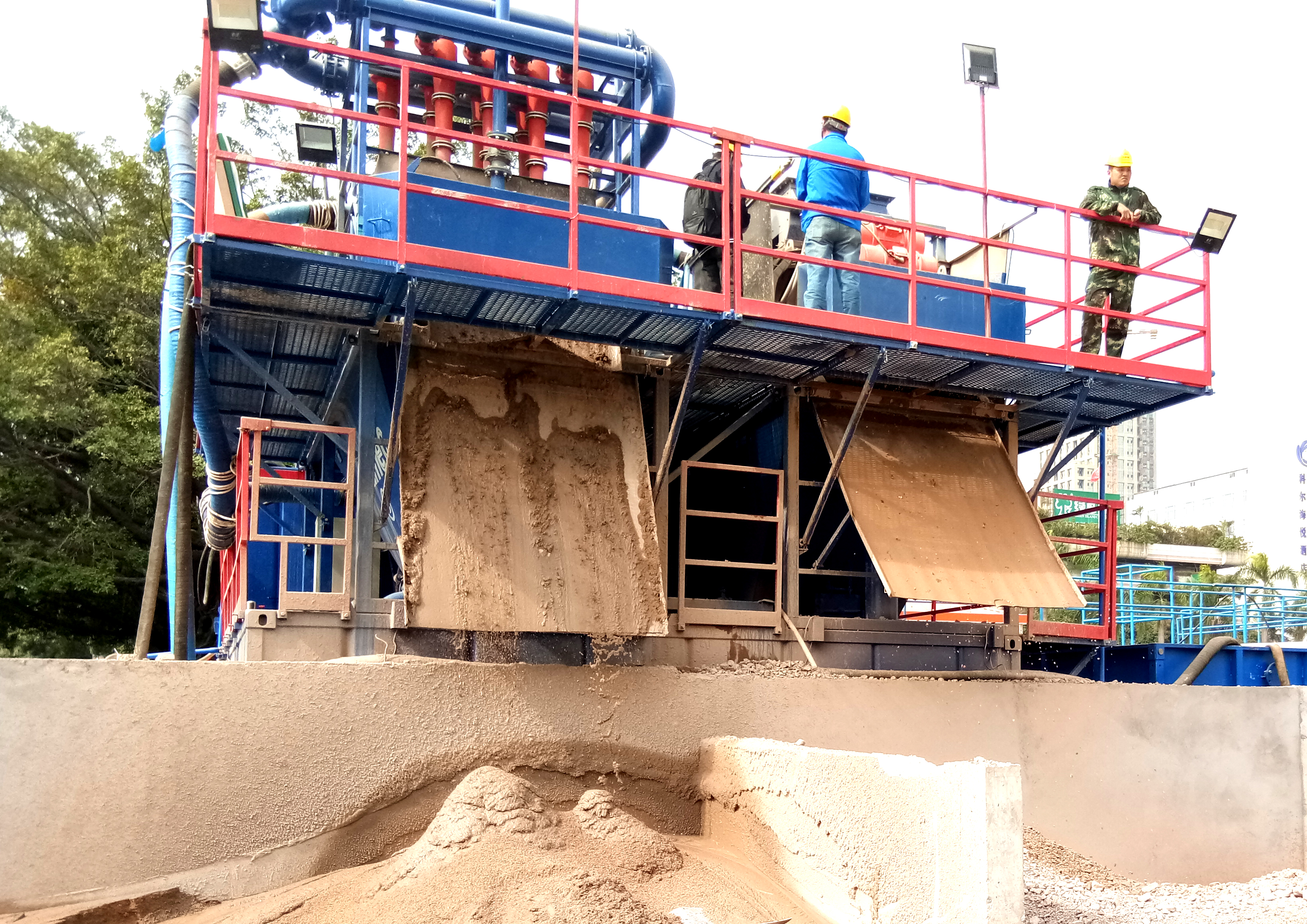
A slurry separation plant is designed to process the mixture of soil, rock, and water produced by the TBM during excavation. The slurry is typically used in conjunction with Earth Pressure Balance (EPB) TBMs or slurry shield TBMs. These machines use the slurry to maintain pressure at the tunnel face, counteract groundwater ingress, and transport excavated material away from the machine. However, to continue efficient tunneling operations, the slurry must be treated and reused. KOSUN offers advanced slurry separation plants engineered for high-performance TBM operations.

How a Slurry Separation Plant Works

Screening involves passing the slurry through screens that filter out larger particles. The remaining slurry then moves to settling tanks, where sedimentation occurs. In this phase, the heavier solids settle at the bottom of the tank, forming sludge that operators can dispose of or process further. Meanwhile, the system collects clarified water from the top and reuses it in subsequent tunneling operations.

Treatment systems may also use filtration processes, especially when finer particles require separation from the water. Advanced filtration systems, such as membrane filters, can achieve a high level of purity, ensuring that the recycled water meets the required standards for reuse. Companies can manage treated solid waste in several ways, depending on its composition, including stabilization, recycling, or safe disposal according to local regulations.

Benefits of a Slurry Separation Plant

The benefits of implementing a slurry separation plant in tandem with TBM operations are manifold.

Firstly, the recycling of water significantly reduces the demand for fresh water sources, which is particularly beneficial in regions where water scarcity is a concern. Secondly, effective handling of excavated materials minimizes the risk of environmental contamination and adheres to strict regulations concerning soil and water quality. Additionally, the efficient management of slurry can lead to cost savings in disposal fees and reduce the environmental footprint of construction activities.

Moreover, the use of a slurry separation plant enhances the operational efficiency of TBM-related projects. By allowing for a continuous and automated treatment process, these plants can keep up with the high rate of excavation, reducing downtime and improving productivity. As the global focus on sustainable development intensifies, the construction industry finds itself compelled to adopt cleaner technologies and methods. Slurry separation plants represent a forward-thinking approach to resource management, aligning with broader environmental goals.

KOSUN equips its slurry separation plants with advanced automation and high-efficiency separation technologies to maximize water recovery and minimize waste.

Conclusion

In conclusion, a slurry separation plant is integral to the successful operation of tunnel boring machines. It provides an effective solution to manage excavated materials, highlights the importance of recycling, and contributes to the sustainability of tunneling projects. As infrastructure development continues to grow, the role of these plants will become increasingly crucial, ensuring that the construction industry adheres to environmental standards while meeting the demands of modern society. The evolution and improvement of slurry separation technology will undoubtedly play a significant part in shaping the future of underground construction. KOSUN provides high-performance slurry separation plants and expert support, helping customers achieve their operational and environmental goals.

Slurry Separation System: Technical Application and Value Analysis for Construction

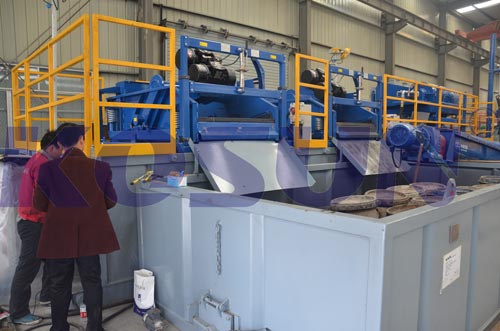
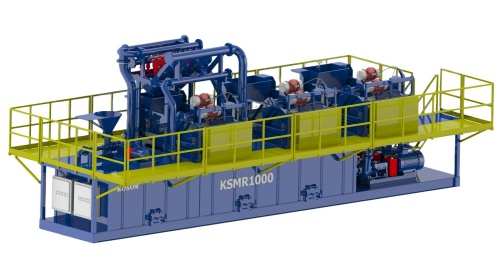
The rapid growth of urban infrastructure projects, including shield tunneling, deep piling, and trenchless piping, has made effective construction slurry management critical for maintaining project timelines and meeting environmental compliance requirements.The slurry separation system has emerged as the industry-standard solution for efficient solid-liquid separation. KOSUN offers advanced slurry separation systems designed to meet the demanding needs of modern underground construction.

Technical Core: Multi-Stage Solid-Liquid Separation Process

The slurry separation system is an integrated system of solids control units designed for slurry recycling and waste minimization:

Pre-treatment: Scalping screens remove bulk gravel and clay clumps to protect downstream equipment.

Sand & Silt Removal: Desander and desilter hydrocyclones utilize centrifugal force to separate medium-to-fine particles.

Dewatering: For high-clay slurry, chemical conditioning promotes flocculation. Decanter centrifuges and filter presses produce low-moisture filter cakes for easy disposal.

Fluid Reuse: Purified liquid is pumped back for immediate reuse, maintaining a closed-loop operation.

KOSUN’s slurry separation systems integrate high-quality components for reliable, continuous performance in demanding construction environments.

Professional Alignment with Industry Application Scenarios

Slurry separation systems offer high adaptability across four core underground engineering sectors:

Slurry Balance Shield (TBM)

The slurry separation system handles high flow rates while precisely controlling slurry density and viscosity to maintain stable face pressure. KOSUN’s systems are engineered for the demanding conditions of TBM tunneling.

Bored Piling

Provides compact, rapid-deployment solutions for rotary, reverse circulation, and impact drilling. KOSUN designs its piling systems for efficient solids control in confined urban sites.

Diaphragm Walls

Supports trenching with hydraulic grabs or cutters, ensuring slurry stability and trench quality. KOSUN’s diaphragm wall systems deliver consistent performance in challenging ground conditions.

Trenchless Construction

Rapidly purifies slurry in HDD and pipe jacking to minimize urban environmental impact. KOSUN designs its trenchless systems for mobility and efficiency in space-limited environments.

Value Realization: Compliance and Cost Optimization

Environmental Benefits

Slurry separation systems achieve waste minimization at the source, eliminating the pollution risks of traditional mud pits and meeting green construction standards.KOSUN designs its systems for closed-loop operation, minimizing environmental impact.

Economic Benefits

Recycling significantly reduces fresh water and bentonite costs. In addition, dewatered filter cakes reduce waste volume and transportation costs, improving overall operational efficiency.KOSUN’s systems deliver measurable ROI through reduced material consumption and disposal costs.

Conclusion

The slurry separation system is an essential component of modern underground engineering. Optimal system selection requires a scientific analysis of the excavation strata to balance performance and cost-effectiveness. KOSUN provides customized designs tailored to global geological conditions and specific onsite requirements, ensuring reliable performance and maximum value.

Several Oily Sludge Management technologies

At present, the total amount of oily sludge produced in our country has exceeded 500 million tons every year, and the output also shows an increasing trend year by year. Oily sludge mainly from the following three aspects.( Oily Sludge Management)

Oily Sludge Management

(1) crude oil extraction process. Crude oil production process will produce a amount of oily sludge. The sludge produced mainly from the oil recovery wastewater treatment, the sedimentation caused by the added water purifying agent and the crude oil produced by drilling.

(2) Oil gathering process. Oil gathering process will produce a amount of oily sludge. Transfer stations and joint station tank sludge, sedimentation tank sediment, grease trap sediments are all oily sludge. Oil sands produced from natural gas purification plants and sludge are also oily sludge.

(3) Sewage treatment plant. Oil refinery wastewater treatment plant will also produce oily sludge, mainly from the biochemical pool of excess sludge, grease trap sediment, flotation tank scum, crude oil tank sediment.

Several Oily Sludge Management technologies

Oily sludge must be treated as it is detrimental to the environment. At present, there are several commonly used methods for the treatment of oily sludge in our country: incineration, thermal desorption, landfill, etc. In addition, there are biological treatment, coking and chemical heat washing.

oily sludge treatment

In response to the requirement of resource-based, harmless and reduction of oily sludge treatment in our country, there are many new oily sludge treatment technologies emerging such as ultrasonic treatment of oily sludge technology, cement sludge co-treatment of oily sludge technology and Solvent extraction processing technology.

The source, composition, characteristics and nature of oily sludge in oilfields all over China are different, so the technology applied to oily sludge management is not the same. Therefore, the oil field in the selection of oily sludge treatment technology should be based on the advantages and disadvantages of various technologies and the scope of application. Combined with their own circumstances choose a reasonable technology.(Editor:Kosun Lily.Wang)

Kosun- China Solids Control Leader&Drilling Waste Management Expert

Tel.: +86 29 87304914

Email: sales2@adkosun.com

Contact person: Lily Wang

Online consulting:

http://www.kosun.com

http://www.kosuneco.com


Prospects for Oil Sludge Management

With the promulgation of the new Environmental Law, the environmental requirements are getting higher and higher for oil fields, and free discharge of oil sludge will not be allowed any more. Oil Sludge Management is becoming a focal issue.

oil sludge management

oil sludge management

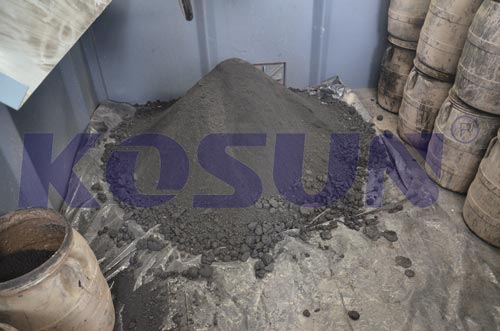
Oil sludge is oil mixed with soil. They will be mixed together and become very difficult to deal with. Oil sludge is mainly from two aspects: Firstly, crude oil from the stratum to the ground and accumulated in all kinds of containers, large tanks and recycling pools and other ground facilities; secondly, oil sludge produced by oil well operations.

Oily sludge is mainly derived from oil field mining and sewage treatment plants. In general, the sludge oil content is from 10% to 50%, and moisture content is from 40% to 90%. The ultimate purpose of oil sludge management is to reduce the harmful resources. The common oil sludge treatment methods are solvent extraction, incineration, biological, coking, oily sludge profile control, and comprehensive utilization of oil sludge. The results show that the current methods for oil sludge management have their own characteristics and scopes of application. As the oil sludge composition is so complex, there is no treatment method that can treat all types of oily sludge.

According to statistics, the pollutant treatment market size is about CNY100~150 billion each year, and according to a rough calculation, the investment in oil sludge management plant needs more than CNY150 billion.

Since 2007, Daqing Oilfield have built nine oil sludge management stations, and the annual treatment capacity can reach 3.2 million tons, all the oil sludge had been treated harmlessly. Changqing Oilfield built a Longdong oil field sludge treatment station in 2013 and used the physically and chemically combined methods, the oil content of the treated oil sludge is less than 2%, and moisture content is less than 60%, while the crude oil can be recovered. Xinjiang Fengcheng Oilfield Work Zone uses microbial agents to deal with heavy oil sludge and sludge oil content is reduced from 15% down to below 2% after treatment, which is very good. The current test has been reviewed by the company.

KOSUN can provide a corresponding set of oil sludge management plant, and our products have been exported to foreign countries, such as the United States, Europe, Russia, the Middle East and other regions, and our oil sludge treatment systems are well received by the foreign customers. If you need more information about our oil sludge management plant, please feel free to contact us! (Editor:Kosun Lily.Wang)

Kosun- China Solids Control Leader&Drilling Waste Management Expert

Tel.: +86 29 87304914

Email: sales2@adkosun.com

Contact person: Lily Wang

Online consulting:

http://www.kosun.com

http://www.kosuneco.com


Oil Sludge Treatment Plant

Oil Sludge Treatment Plant (equipment) :

Shale Shaker for coarse solids separation

shale shaker
shale shaker

Decanter Centrifuge for fine solids separation or water and oil separation.

-Oil Water separators for two phase liquid separation.

-Thermal desorption unit for minimize the oil on the solids down to 0.3%.

The oil sludge is the waste of solid with oil from oil drilling, transportation, refinery and oil waste water treatment processing. It contains big quantity benzene series, phenols, anthracene, pyrene and other harmful rotten material. It will be a resource waste and pollution for environment.

Oil sludge origin:

  1. Crude oil drilling work
  2. Rig site waste during gathering and transportation
  3. Waste water treatment plant in refinery plant

Different areas and different clients has different oily sludge and final requirements for the oily sludge separation & treatment, following questions are needed to be clear for us to provide the best proposal for your oily sludge treatment solutions.

-What is the origin and geographic location of the waste sludge (drilling, refinery, other)?

-What is the makeup of the oil sludge (percentage of oil, water and solids)?

-What volume of oil sludge is to be treated?

-How long you need to complete the treatment of the oil sludge?

-What is the challenge or problem of the current situation?

-What is the target to achieve for the final oil, water and solids?

-What process / equipment is being used on location at present for the oil sludge treatment? How is the performance now?

-What’s your budget for the oil sludge treatment plant?

Knowning above queations,we can supply you suitable Oil Sludge Treatment Plant ! (Editor:Kosun Lily.Wang)

Kosun- China Solids Control Leader&Drilling Waste Management Expert

Tel.: +86 29 87304914

Email: sales2@adkosun.com

Contact person: Lily Wang

Online consulting:

http://www.kosun.com

http://www.kosuneco.com