The function and advantages of drilling fluid cleaner

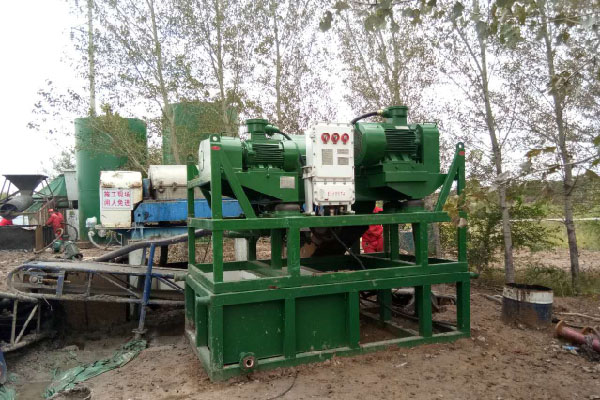
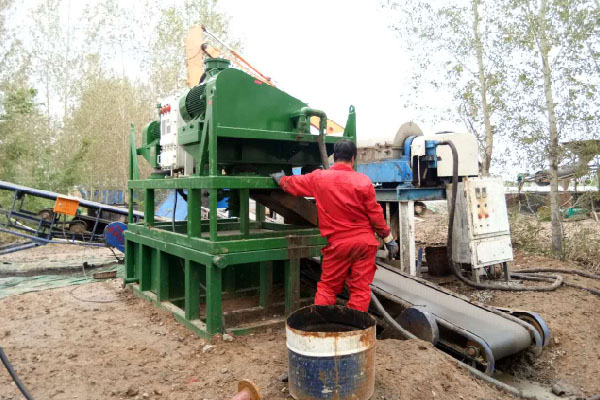
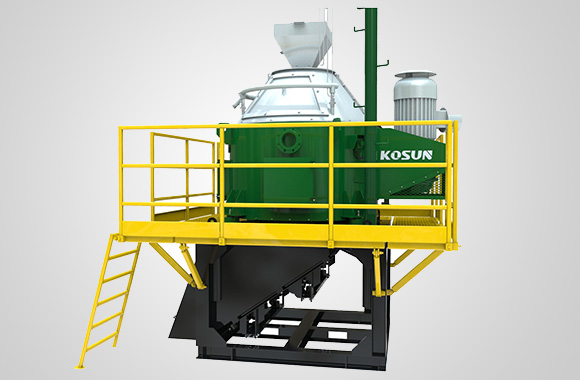
The drilling fluid cleaner is a combined mud cleaner for sand removal and mud removal, including a cyclone desander, a desilter, a pressurized pump, a cyclone, an underflow trough, a drilling fluid shaker, a support and a base. The mud is separated by cyclone desander and desilter, and the overflow returns to the mud solids control system. The underflow is further screened and processed by the shale shaker. If necessary, the shale shaker of the mud cleaner can be used as the front-stage shale shaker.

Structural features of drilling fluid cleaner:

1. High degree of automation: The feeding, separation, and unloading processes of the centrifuge are continuously and automatically carried out under high-speed operation, and the automatic control of centrifugation and separation is realized by programmable control.

2. Working performance: The differential used in the centrifuge is a two-stage involute planetary gear differential, a cycloidal pinwheel differential is rotating, the working temperature is low, the transmission torque is large, and the performance is reliable. The design of the anti-blocking device of the screw pusher can make the power larger, which has a great effect on the torque of the equipment itself, so that the work performance is better.

3. Strong craftsmanship: the centrifuge adopts dual motors and dual frequency conversion energy feedback differential speed for flexible stepless adjustment and online intelligent control, and the speed can be adjusted at any time according to the changes of materials.

4. Low noise.

5. Large processing capacity.

6. Reliable performance: The centrifuge is equipped with torque protection, power control and other protective means, which can effectively eliminate or damage the machine caused by sudden failures. All drives are equipped with protective covers.

7. Good working site: the centrifuge to separate materials is carried out under closed conditions to ensure that the operation site is clean and pollution-free, and the production is clean and hygienic to achieve clean production.

KOSUN- China Solids Control Leader&Drilling Waste Management Expert
Email: sales2@adkosun.com
WhatsApp/Wechat:+86 18792396268
Contact person: Lily Wang
Online consulting:
http://www.kosun.com
http://www.kosuneco.com
The Role of Drilling Fluid Vacuum Deaerator

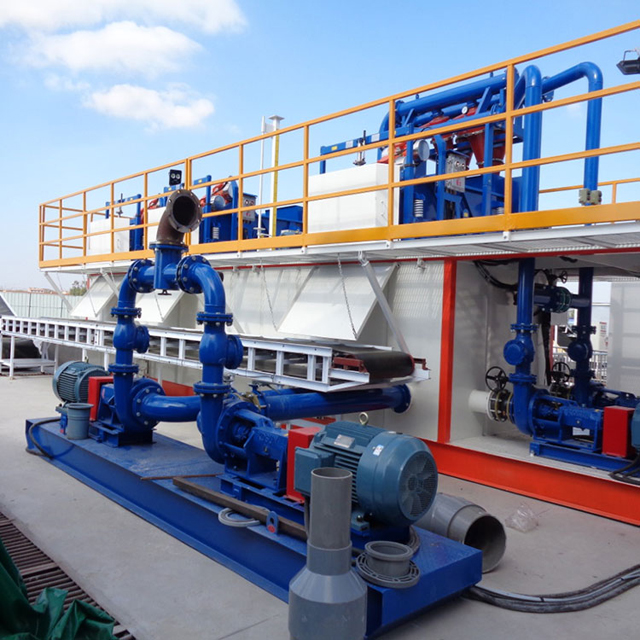
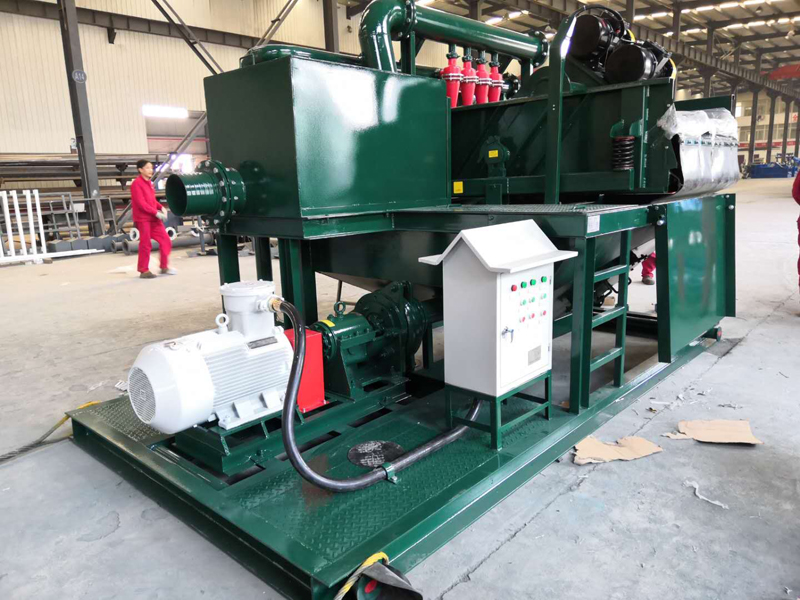
The drilling fluid vacuum deaerator, usually installed after the drilling fluid shale shaker, can effectively separate harmful gases in the drilling fluid mud, while maintaining the specific gravity of the mud, and protecting the sand pump and mud pump to improve the treatment effect of subsequent equipment . KOSUN vacuum deaerator adopts an autonomous slurry suction method, no additional slurry supply pump is required, and a unique infrared liquid level monitoring system is configured to ensure the continuous and safe use of the equipment.

Vacuum deaerator is a new type of special equipment used to process gas intrusion drilling fluid, also called negative pressure deaerator, which can quickly remove various gases invaded into drilling fluid, restore the specific gravity of mud and stabilize mud performance, having a very important role. At the same time, it can also be used as a high-power mud agitator, suitable for all kinds of mud circulation purification systems. This equipment is a negative pressure deaerator with a scientific and reasonable design structure, which can effectively separate gas and liquid, filter out impurities, and ensure that the exhaust pipe is always unblocked.

KOSUN- China Solids Control Leader&Drilling Waste Management Expert
Email: sales2@adkosun.com
WhatsApp/Wechat:+86 18792396268
Contact person: Lily Wang
Online consulting:
http://www.kosun.com
http://www.kosuneco.com
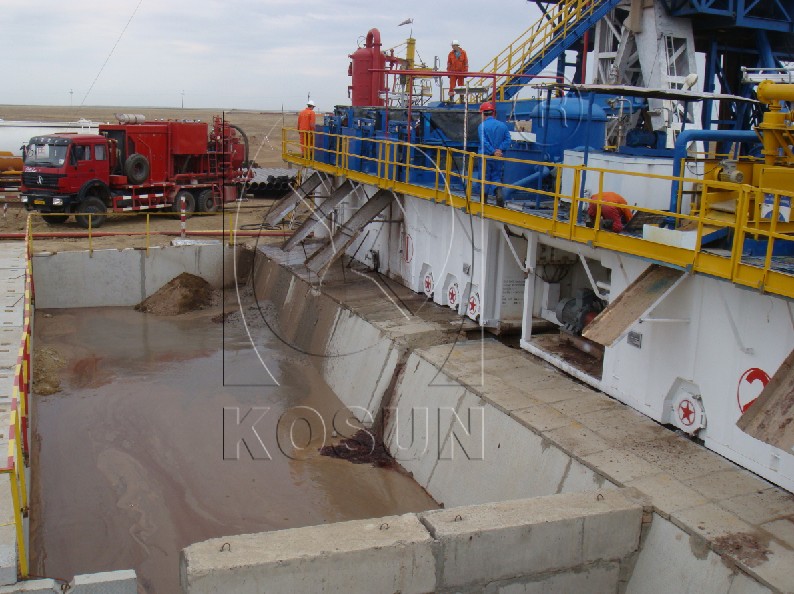
Dredge Dewatering System-KOSUN

Considering the big mud content and difficult environmental management in the proccess of river dredging, KOSUN is aimed to design and research a integration Dredge Dewatering Solution in order to save a lot of cost for customer. At present, KOSUN can design and configurate different model Dredge Dewatering System to meet requirements of different customers according to the working condition of river silt the customer provided. 

Dredge Dewatering System

KOSUN Dredge Dewatering System are applied to Lake dredging, river dredging, pond reservoir dredging engineering, municipal pipelines dredging sludge, clear water stations desilting, river dredging engineering, enterprise slag settling pond engineering, drainage sewage dredging engineering such as dredging project.

KOSUN Dredge Dewatering System is mainly consist of shale shaker, desander, desilter and decanter centrifuge. In the actual selection process, the 3-6 stage separation system can be selected based on different situations. Dredge Dewatering System can make the water content of the slurry under 80% and can decrease the slurry volume. That can be transported by the common slag car to save more transportation cost.

Know more about KOSUN Dredge Dewatering System, please email sales@adkosun.com.

Tag:River Dredge Dewatering System, River Dredging Dewartering Equipment, Dredge Dewatering System.

Kosun-River Dredge Dewatering System Expert
Email: sales2@adkosun.com
Wechat:+86 18792396268
Contact person: Lily Wang
Online consulting:
http://www.kosun.com
http://www.kosuneco.com
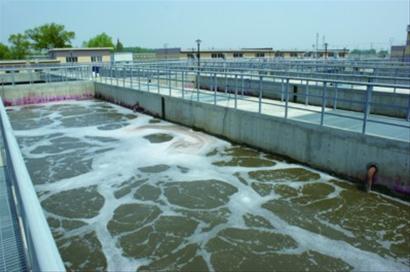
Dredge Slurry Separation System

River dredging process system is generally adopts a cutter suction dredger to absorb the muddy water mixture at the bottom of river, and then transport it along the pipeline to a sludge drying treatment field. After machine sorts the garbage mixed in mud, the mud is passed into the concentration tank in the field, and the mud water separation is carried out through the mud treatment system. Finally, water reaches the standard discharge, and the wet sludge is sent to sludge dewatering equipment to dehydrate and becomes solidified mud cake for reusing.

Dredge Slurry Separation System mainly used for the separation of sludge from rivers. KOSUN Dredge Slurry Separation System is consist of shale shaker, desander, desilter or decanter centrifuge for 3 to 6 stage separation depending on the needs.

KOSUN Dredge Slurry Separation System is consisting of 3 parts. The first one is the dredging boat and first stage separation pool for large size of the trash. The dredging boat is always moving on the surface of the lake or river, and the suction unit would go down deep to the bottom of the lake or river and then suck sludge then transfer to the ground by a hose which is always float on the water surface. On the ground, there will be a pool which is divided into several parts by different mesh size of wire screen. The sludge flow coming out from the hose will get into the pool; the large size of the trash in the sludge would be blocked by these several wire screens, while the slurry will flow away for next process.

The second part of the Dredge Slurry Separation System is the recycling system which is including several equipment that is used especially for the solids and liquid separation. The slurry will be fed into a scalping shaker, here the solids which is large than 1/8 inch would be separated out, and the slurry would then be pump transferred to the desander for much fine solids removing. After treated by the desander, almost all the solids with size of 50 microns would be removed out.

The third part of the Dredge Slurry Separation System is the ultra-fine solids removing equipment. Some contractors like to use the filter press as the final solids removing units, the solids separated are really dry and shaped like cake. While another option is to use the decanter centrifuge that could be used to remove the ultra-fine solids with size down to 2 microns. After treated by the filter press or the centrifuge, the water is already clean that could be flow back to the lake or river.

For more information of KOSUN Dredge Slurry Separation System, please contact with us by sales2@adkosun.com.

Tunnel muck treatment System-KOSUN

Xi’an KOSUN Environmental Engineering Co., Ltd. focuses on development and services of complete technologies and equipment of sludge and Tunnel muck reduction and resource utilization.Our Tunnel muck treatment System had been successful used in shenzhen,China.

Tunnel muck should be considered as a valuable resource: if it is managed and treated correctly, it can be used for different purposes. This would lead not only to environmental benefits but also those of an economic nature. This work is part of the REMUCK project and it has the purpose of evaluating the effects of different treatments on different types of excavated rock. Five case studies have been selected and, of these, two were excavated with TBM (the Torrent-La Thuile tunnel and the Brennero tunnel), one with EPB (the Turin underground railway) and two using traditional excavation methods (Turin underground railway station and the Omegna tunnel). Tests have been carried out in the laboratory on both the muck in its natural state and on muck treated in two different plants (a mobile plant and a fixed plant) in order to characterise the aggregates from the shape and mechanical resistance points of view (according to EN 933-3 and EN 1097-2, respectively). The results of these tests have been compared with the threshold values foreseen in a muck management plan for a tunnel in Switzerland in order to verify the quality of the treatments the recycled aggregates were subjected to. This has made it possible to evaluate the suitability of the treatments, on the basis of the foreseen types of use, and to propose alternative working schemes for the nonconforming cases.

Italy is one of the first countries in the world as far as the number of tunnels is concerned. Many new tunnels are currently under construction or have been planned (300 km of railway tunnels and 150 km of road tunnels, some more than 500 m long, but also metropolitan tunnels). Tunnels are usually excavated in mountain areas of great value: the longest ones in Italy are in fact located in the Alps or in the Apennine mountain range. Approach: If the re-use of excavated material is not taken into account each time a tunnel is excavated, new quarries are required to obtain aggregates for cement, asphalt and concrete and new landfills are created, to allocate the tunnel muck. If the planned tunnel is large (in size and length), numerous quarries and landfills can be expected in the vicinity of the tunnel, with a consequent considerable amount of environmental damage. Results and Conclusion: For these reasons and not only for the obvious economic reasons, it is necessary to develop all the technologies that make the re-use of muck possible as an aggregate for cement and asphalt and as material for road and railways embankments.

Know more about KOSUN Tunnel muck treatment System, please email sales@adkosun.com.

Tag:Tunnel muck treatment, Tunnel muck treatment System.

Piling Mud Treatment Solution-Pilling Slurry Separation Plant

Pilling Slurry Separation has always been a problem in engineering construction. In the process of piling, there will produce a lot of mud, the mud is suspension liquid contains a certain amount of fine clay particles, which has a certain viscosity and difficult to separation for a long time.

Now how can we treatment these mud from piling? There are four Pilling Slurry Separation Methods:

Pilling Slurry Separation Plant

1.Pilling Slurry Separation Plant: This method is to use the special pile mud treatment equipment to separate the mud from slurry water. Such as piling mud centrifuge, piling mud dewatering machine, piling mud separator, piling mud curing equipment. The biggest advantages of this method is convenient and effort. Sludge treatment efficiency, more environmental protection.

  • Pilling Slurry Separation Method of Sedimentation basin : On construction site, we can construct one sedimentation basin. First, we need to discharge sewage into sedimentation basin. Removing suspended solids, oil material and Neutralization processing, after detection to achieve discharge standard, we can discharge into the river.


3.Pilling Slurry Separation Method of Natural dehydration: In the process of drilling perfusion, we can use shaker screen to seprate small gravel, sand and other solid particles from pile mud. then discharge it into mud pit and sufficient to precipitate until the natural dehydration and solidification.


4.Pilling Slurry Separation Method of Flocculation Treatment: For waste mud water, we can add flocculants into it. Because the mud is suspension liquid contains a certain amount of fine clay particles, the macromolecule flocculant is a kind of water-soluble polymer,When mixed with mud water, it can destroy the stability of the slurry water in order to settlement of clay particles from the water condensed quickly.

Tag:Pilling Slurry Separation Plant

Kosun- China Solids Control Leader&Drilling Waste Management Expert
Email: sales2@adkosun.com
Wechat:+86 18792396268
Contact person: Lily Wang
Online consulting:
http://www.kosun.com
http://www.kosuneco.com
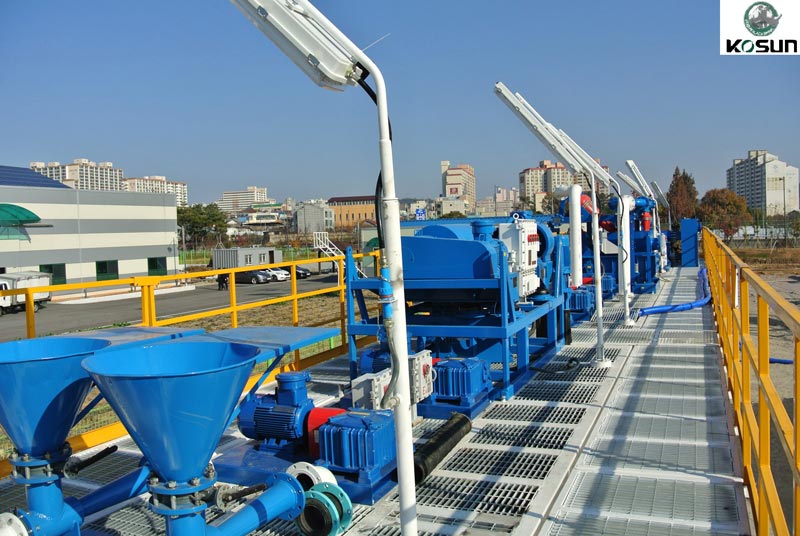
Different from China, developed countries abroad have long realized that sludge treatment and disposal is an indispensable link in the process of sewage treatment.

Different from China, developed countries abroad have long realized that sludge treatment and disposal is an indispensable link in the process of sewage treatment. They have made clear provisions on the objectives of sludge treatment and disposal in terms of laws and policies, and ensured the implementation through a series of policies.

In sludge treatment of the United States, in addition to the treatment of generated sludge, the whole sewage treatment system and sludge treatment system are regarded as an organic whole. In sewage treatment, sludge co-treatment is realized. As early as 1998, the European Union legislated to ban the Marine discharge of sludge, and the sanitary landfill of sludge should be gradually banned. The annual sludge capacity of 50,000 sewage treatment plants in EU countries is 40 million tons, and more than 50% of the sludge has been treated with anaerobic digestion, among which the anaerobic digestibility of sludge in Britain reaches 66%.

It can be seen that policy and technology are still effective ways to improve China’s sewage treatment capacity. Technical methods: to further accelerate the localization of sludge treatment and disposal equipment, improve the management and operation level of sewage treatment plants. In terms of policy, effectively coordinate the management of sludge treatment and disposal involving multiple units; More binding mandatory sludge discharge standards; Actively support the development and application of new sludge treatment technology; To encourage investment in sludge treatment by water plants. 66%.

The sewage treatment industry still has a lot of things to do.

Although the sewage treatment capacity, treatment capacity and treatment rate are all improving, it does not mean that the sewage treatment effect is improving simultaneously. Therefore, under the big theme of improving the quality and efficiency of sewage today, the sewage treatment industry still has a lot of things to do.

In addition, for water enterprises in the formulation of corporate strategy, the assessment objectives as a starting point. The first thing an enterprise needs to consider is whether the assessment is the growth of scale or the growth of business revenue, and the path is different under different standards. Some companies are thinking about scale expansion and how much future assets they would have if they paid a certain price per ton of water.

In terms of sewage discharge standards, statistics are carried out from the two dimensions of the current sewage discharge standard and the functional target of the receiving water body. Beijing standard B will be implemented for about 60% of projects, and Beijing standard A will be implemented for around 20.Beijing has relatively special requirements in terms of standards due to some problems such as reuse of tailwater and supplement of landscape water. In Tianjin project, landmark B accounts for 37%, while landmark A accounts for 39%.In Hubei, Shanghai and Guizhou, grade A is dominant, but grade B in Hubei and Guizhou also has A certain proportion. It is not recommended to use the current emission standards to push back the expansion of enterprises in the market. There is still a certain proportion of sewage treatment projects in the wood powder province to implement the level I B standard, but it does not mean that it has a large need for bidding, so it can only meet the discharge standard. In addition, there are some special places, such as Anhui, which have special standards due to Chaohu lake and requirements for watershed management in the great protection of the Yangtze river.

Kosun Environmental Engineering oil sludge treatment

Kosun Environmental Engineering oil sludge treatment scheme 1:Air flotation scheme for oil sludge recovery and separation system.
The application of the air flotation scheme in the oil sludge recovery and separation system can effectively realize the separation of oil, water and mud, and recover the reusable oil products in the sludge. At the same time, targeted chemical agents are used to reduce the oil content of the discharged sludge, with the lowest oil content of 0.5%, meeting the environmental protection emission standard.


Kosun Environmental Engineering oil sludge treatment scheme 2:Skid-mounted oil sludge treatment system.
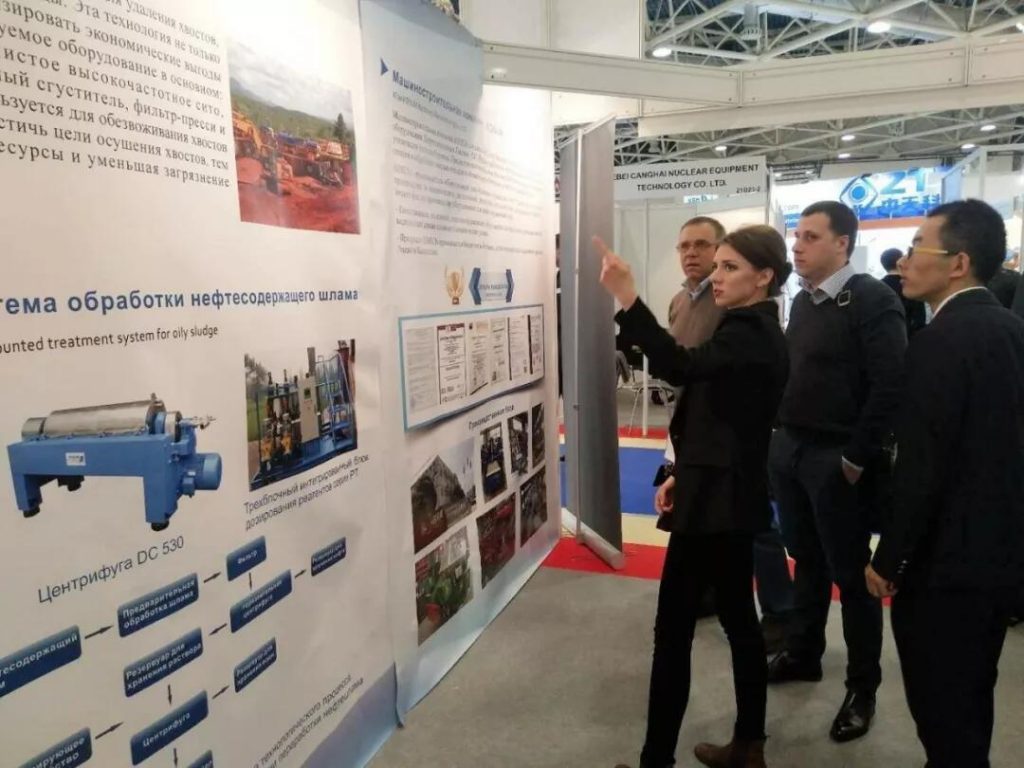
On the basis of introducing advanced separation technology from Europe and combining with domestic military manufacturing team, Kosun Environmental Engineering is specialized in manufacturing high-speed horizontal screw centrifuges.With the development concept of combining independent research and introduction, the company strives to make a breakthrough in the application function of centrifuge physics, so as to solve the secondary pollution problem caused by chemical treatment.Company research and development of special oil sludge, dirty oil, aging oil two phase and three phase horizontal screw centrifuge won the unprecedented good results in production practice. The various indicators are better than national standards, with a core of the special oil sludge horizontal screw centrifuge treatment system is fully operational, it will reduce the labor intensity of users, reduce the production cost of the using enterprise, at the same time can also provide cost-effective manufacturing in China for the international market.

Kosun Environmental Engineering oil sludge treatment scheme 3:Analytical processing technology of electric radiation and heat.
Kosun Environmental Engineering analytical processing technology of electric radiation and heat is mainly composed of “sludge pretreatment + analytical processing of electric radiation and heat + water treatment” and other processes.In order to meet the requirements of “reduction” of the factory, this scheme mainly realizes reduction of oily sludge through the analytical processing technology of electric radition and heat, which make the liquid phase reduction rate over 94%.

Application range of Kosun Environmental Engineering oil siudge treatment:
1.Drilling mud
2.Field oil
3.Oil field drilling oil base mud deoiling treatment
4.Waste machinery lubricating oil and emuision oil treatment
5.Fracturing fluid and flowback effluent
6.Complex mixed oil sludge from industrial oil sludge garbage pit
7.Pelagic tanker bilge oil sludge
8.Oil refinery water treatment oily scum and oily bottom sludge and so on
9.Oil sludge at tank bottom of oil field union station
10.Sediment isolation layer in natural sedimentation and dehydration of oil field union station
11.Slag containing sludge from ship fuel oil and lubricating oil separator
12.Coal tar is extracted from coal chemical industry
13.Aging oil of oil field union station
14.Oil-bearing scum produced during water treatment in oil field
15.Oily sludge treatment in oil chemical plants
16.Other Mineral-bearing oil sludge sand treatment

Tel.: +86 29 87304914
Email: sales2@adkosun.com
Contact person: Lily Wang
Online consulting:
http://www.kosun.com
http://www.kosuneco.com
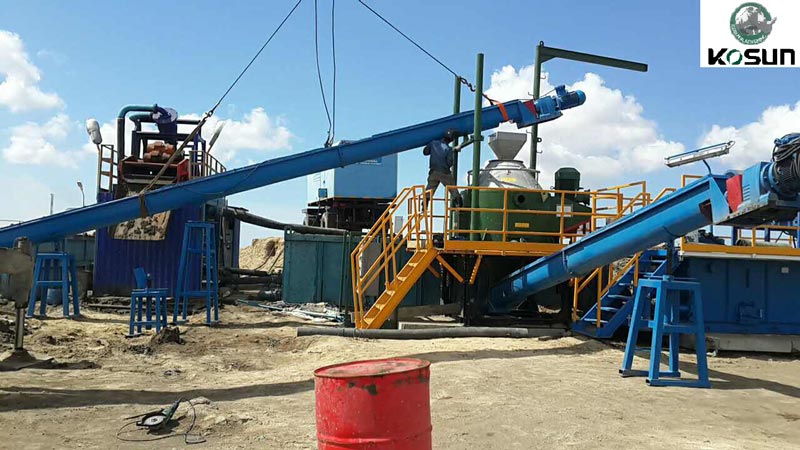
Analysis of Resource Utilization of Sludge

KOSUN is a professional company that provides solid-liquid separation products and integrated solutions to solid waste disposal in the fields of energy conservation and environment protection, and focuses on development and services of complete technologies and equipment in sludge reduction, harmlessness and resource utilization. The sludge treated by KOSUN vertical centrifuge can be used as various resources in the following fields:

1. Agricultural resource utilization of sludge
If the sludge is used for agricultural purposes, it has the advantages of low operating cost, low energy consumption and low investment, and the organic part in sludge can be converted into the modifier component in the soil, so this utilization way is taken as the most promising disposal method.

2. Building materials utilization of sludge

2.1. Cementitious materials utilization of sludge
For sludge, it often contains more ash, especially in the treatment of sludge in wastewater by coagulation method, which contains a lot of Fe and Al components, and can be used as additives of building materials.

2.2. Sludge ceramsite
For lightweight ceramsite, it is usually used as a flower covering material or as a concrete aggregate and roadbed.

2.3. Sludge brick
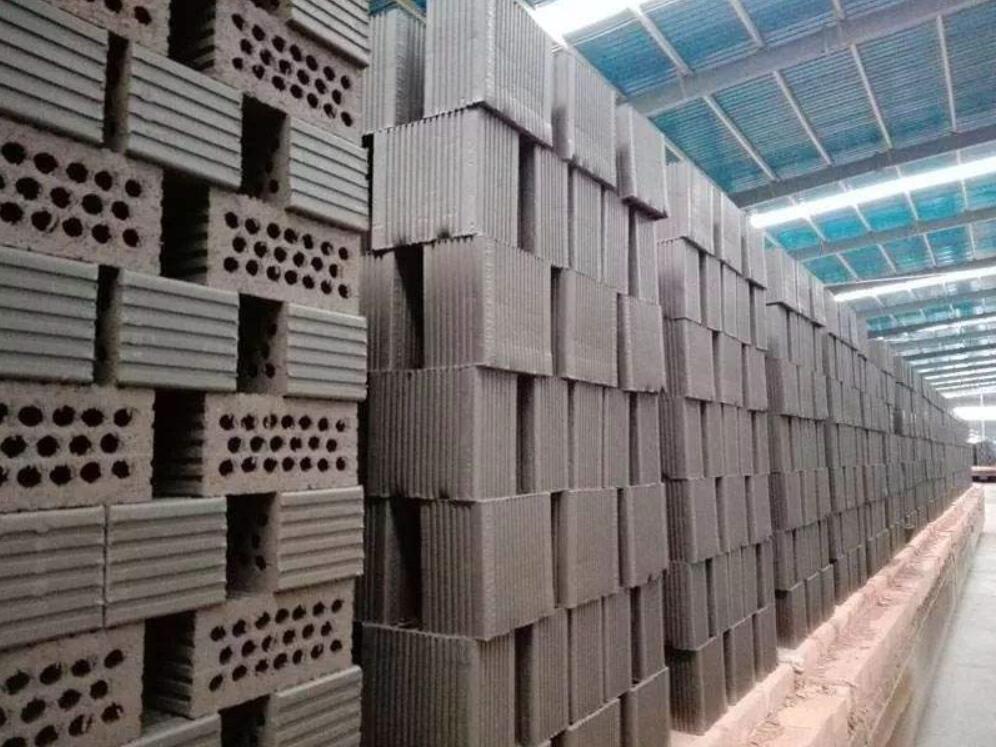
Relevant researches show that sewer sludge can be used to make ecological bricks used in construction. This kind of brick is actually made by the following process: 10% sludge is mixed into the clay and then fired at 900°C, which can optimize the effect.

3. Animal feed utilization of sludge

Sludge contains lots of corresponding substances with many useful values, such as ash content ratio of 26.1% to 46.3%, fatty acids of 0 to 3.5%, and crude protein of 28.4% to 40.8%. Therefore, it can be treated as feed protein.

4. Sludge as fuel

The sludge itself is rich in organic matter. After low-temperature carbonization of sludge, the calorific value is equivalent to lignite, so the sludge can be used as fuel with a low calorific value.

If the sludge is not treated and is directly discharged into the environment, it will be seriously harmful to the surrounding environment. After the sludge is treated harmlessly, stabilized and reduced in volume, it can be used as a valuable resource in many fields.