Key Factors Affecting Drilling Fluid Vibrating Screen Efficiency

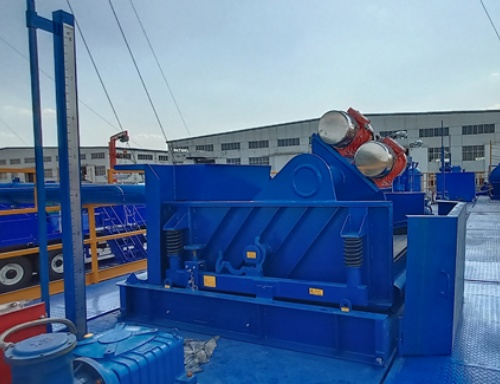
During oil drilling, drilling fluid is transported to the mud control system by mud pumps. As the first processing equipment, the drilling fluid vibrating screen plays a key role in solid-liquid separation due to its early separation time, fast processing speed, and economic efficiency. The working efficiency of the vibrating screen directly determines the processing capacity of the entire mud control system. Therefore, it is crucial to identify the main factors affecting its efficiency. These factors fall into three categories.
Vibration Mode

The vibration modes of vibrating screens mainly include three types: linear motion, circular motion, and elliptical motion. The position of the vibrator’s center of gravity determines the vibration mode.

When the center of gravity is located within the vibrator itself, the equipment generates circular motion. If the center of gravity is above the vibrator, elliptical motion forms. Such motion needs to rely on the screen slope to transport drill cuttings, but it will, to some extent, reduce processing capacity. When the center of gravity is above the vibrator and slightly forward, the vibrating screen moves in a straight line. This mode can maintain a stable drilling cuttings conveying speed.

Amplitude and Frequency

Amplitude, vibration mode, and the rotational speed of the vibrating motor jointly determine the processing capacity of the vibrating screen. Among these, motor speed directly affects vibration frequency. The higher the frequency, the better the general solid-phase separation effect. For instance, the vibration frequency of domestic high-frequency vibrating screens is mostly maintained at around 2,000 times per minute.

Amplitude refers to the vertical movement distance of the vibrating screen , jointly determined by vibration mass and eccentricity. Vibration intensity is reflected in the centrifugal acceleration generated by the vibrator, indicating the force exerted by the screen on solid particles. Theoretically, increasing amplitude can enhance the processing effect. However, it also leads to increased force on the equipment, potentially shortening service life. Therefore, in both design and practical application, operators must balance performance and durability.

Mesh Count and Material of the Screen

Generally, shale vibrating screens are equipped with 2 to 4 layers of screens. Drilling fluid passes through each layer in sequence for classification treatment. Improper selection of mesh size or screen damage significantly reduces solid-phase separation efficiency. In addition, improper installation can cause the screen to wear out or tear prematurely. Therefore, when choosing a screen, it is essential to consider its material properties and installation quality to ensure continuous and stable equipment operation.

The Advantages of KOSUN Vibrating Screens

The vibrating screens manufactured by Xi’an KOSUN Machinery have significant advantages in oil drilling.

Firstly, modular design and high-precision processing techniques ensure smooth and reliable equipment operation.

Secondly, they offer multiple adjustable vibration modes , adapting to different formation conditions and drilling requirements.

Thirdly, high-quality motors and shock absorption systems ensure high-frequency vibrating screening efficiency while extending equipment service life.

Finally, high-strength composite screen mesh materials combined with scientific structural design significantly enhance screen durability and processing efficiency, providing customers with an economical and efficient all-around solids control solution.

Conclusion

The efficiency of a drilling fluid vibrating screen depends on three main factors: vibration mode, amplitude and frequency, and screen mesh count and material. By understanding these factors and choosing high-quality vibrating screens like those from KOSUN, with modular design, adjustable vibration modes, quality motors, and composite screens, operators can maximize solids control efficiency, reduce downtime, and lower overall drilling costs.
How to Remove Oil Tank Sludge: Effective Treatment Solutions Explained

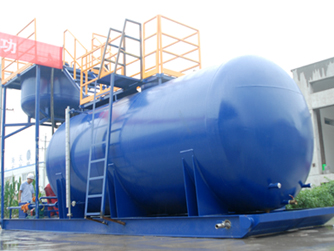
Oil tank sludge is a common problem. It refers to the accumulation of sediment and other impurities at the bottom of an oil tank. Over time, the sludge can become quite thick, impacting the tank’s effectiveness and the quality of the oil it holds. Therefore, it is important to implement proper oil tank sludge treatment to prevent accumulation and improve overall tank efficiency.

oil tank

How Is Oil Tank Sludge Formed?

Sludge forms when oil is left standing in a tank for an extended period. This causes the oil to separate, with heavier components sinking to the bottom. As the sludge builds up, it can reduce usable space within the tank and increase the risk of corrosion. Furthermore, if the sludge is not treated, it can eventually lead to tank failure and oil spills, which have a significant environmental impact.

Prevention and Inspection

To prevent sludge accumulation, oil tanks should be regularly inspected and cleaned. This can involve draining the tank, removing sediment and impurities, and refilling with fresh oil. However, this process can be time-consuming, expensive, and result in significant downtime. Therefore, an effective oil tank sludge treatment process is essential.

Chemical Cleaning

One common approach to treating oil tank sludge is using chemical agents to break down the sludge into smaller particles for removal. This process, known as chemical cleaning , involves adding a chemical mixture to the tank. The chemicals react with the sludge, breaking it down so it can be pumped out. While this process is effective, it can be costly, and the chemicals used may be harmful to the environment.

Mechanical Cleaning

Another approach to treating oil tank sludge is using mechanical methods. This involves specialized equipment to remove sludge from the bottom of the tank. One common technique is vacuum cleaning , which uses a vacuum truck to remove the sludge. Although this method is effective, it can be time-consuming, and the tank may need to be taken out of service during cleaning.

Bioremediation

A newer approach to the sludge treatment involves the use of biological agents. These agents are specifically designed to break down sludge without harsh chemicals or mechanical cleaning. This process, known as bioremediation , introduces bacteria into the tank that consume the sludge, turning it into harmless by-products. Therefore, this method is environmentally friendly and can be an effective alternative to traditional treatment methods.

Conclusion

Sludge treatment in tanks is an essential process. Sludge buildup can impact tank efficiency and lead to costly repairs and environmental damage. Therefore, it is crucial to have an effective treatment process in place, whether chemical cleaning, mechanical cleaning, or bioremediation. Each method has its advantages and disadvantages, and the appropriate choice depends on facility requirements. However, with proper maintenance and treatment, sludge accumulation can be minimized, and tank efficiency and longevity can be greatly improved.

How KOSUN KSMR-200 Overcomes HDD Mud Recycling Challenges in Confined Jobsites

Mud management directly affects drilling speed and compliance costs on modern jobsites, making an efficient HDD mud recycling system an absolute necessity. Raw mud returning from underground contains large, hard cuttings, while exhibiting high viscosity, easy segregation, and highly variable properties. Without proper purification equipment, crews must dig temporary mud pits or haul away liquid waste.

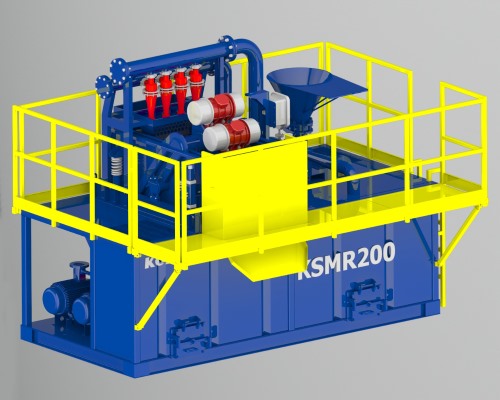
These crude methods create three major industry pain points in narrow urban zones: high fluid chemical costs trim project profits, large solids control equipment cannot fit into restricted spaces, and operators face immediate shutdown risks from strict environmental audits. Therefore, introducing a compact, integrated setup has become essential for contractors to reduce operational costs. This equipment uses modular integration to control drilling waste at the source and enable real-time fluid reuse.KSMR-200 HDD mud recycling system

High-Efficiency Advantages of the KSMR-200 HDD Mud Recycling System

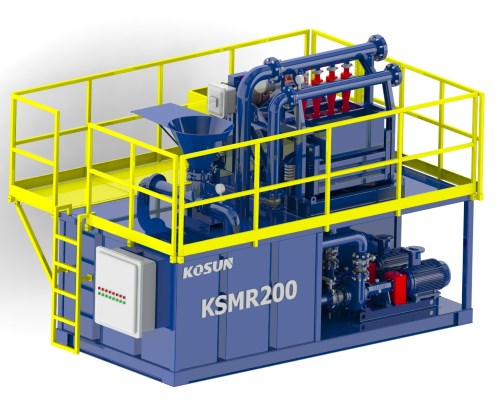
To handle the low displacement and highly restricted spaces of small-to-medium trenchless projects, KOSUN developed a flagship solution: the KSMR-200 HDD mud recycling system. As a top-tier performer in fluid separation, this equipment delivers distinctive structural and technical advantages:

  • Ultra-Compact Modular Integration: Traditional mud purification plants are massive and complex. However, the KSMR-200 condenses multiple functions into a highly concentrated package. It integrates mud cleaning, fluid mixing, and safe storage onto a single steel skid base. The compact frame minimizes the total jobsite footprint to under 15 square meters. This lightweight design allows flatbed trucks to transport the whole unit easily, shortening assembly and teardown times.
  • Dual-Deck Linear Shale Shaker Line of Defense: The core technology relies on the proprietary LS2·752 dual-deck linear shale shaker. Within a very small installation space, the dual-screen configuration gives the slurry higher linear acceleration and multi-stage classification capabilities. Combined with adjustable high G-force trajectories, it completely prevents fluid loss and severe mesh blinding when processing high-viscosity fluids.
  • Micron-Grade High-Precision Purification: Though compact, the system delivers strong fluid dynamics performance. By optimizing hydraulic distribution across the desander and desilter hydrocyclone manifolds, this small HDD mud recycling system maintains a stable processing capacity of up to 50 m³/h. More importantly, it achieves a precise cut point down to 20 microns, extracting harmful fine colloidal solids to prevent excessive wear on downstream high-pressure mud pump fluid ends.KSMR-200 HDD mud recycling system

Closed-Loop Ecology and Value Transformation of the HDD Mud Recycling System

Deploying the KSMR-200 HDD mud recycling system shifts trenchless operations from traditional waste disposal to source-controlled closed-loop processing:

  • 100% Fluid Recycling with Zero Fresh Water Consumption: The system utilizes a self-balancing closed circuit. The clarified mud flows directly to the mixing system to combine with new chemical additives. The mud pump then routes the fluid back to the drilling rig for continuous reuse, eliminating fresh water consumption during operations.
  • Extended Equipment Lifespan and Safety Compliance: All electrical components fully meet international explosion-proof, dust-proof, and rain-proof standards. Critical flow components feature tungsten carbide wear-resistant layers. This heavy-duty engineering ensures stable operations under extreme weather or high sand loads, reducing unplanned jobsite downtime to a minimum.

Conclusion

Instead of focusing on initial purchase costs, industrial fluid processing customers now evaluate total lifecycle costs. A premium HDD mud recycling system that operates efficiently within tight urban footprints provides an essential tool. Ultimately, it helps global drilling companies maximize tunneling efficiency while ensuring strict environmental compliance.

Decanter Centrifuge Selection and Market Trends

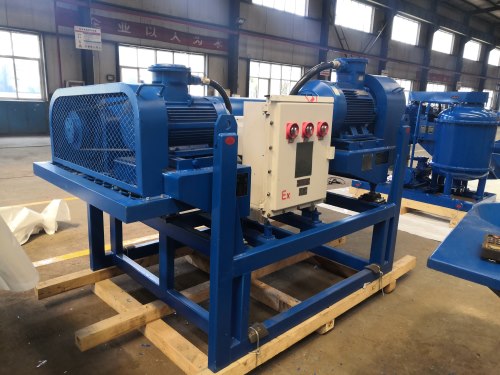
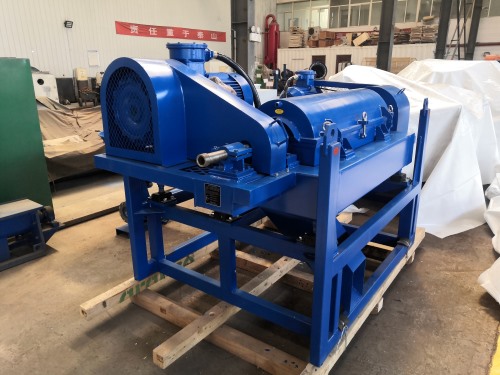
The decanter centrifuge acts as critical equipment for closed-loop fluid circulation systems. Facing complex and variable site conditions, modern industrial customers are shifting their equipment selection preferences significantly.

Market Demand Shifts Toward VFD and Long Bowl Centrifuges

Uncertainty in formation structures and fluid properties remains a core pain point for field operations. Fixed-speed equipment fails to balance fine separation with multi-functional operations. The modern market clearly favors variable frequency drive (VFD) centrifuges that feature high-speed shearing and flexible adjustment capabilities.

During different process stages, customers require equipment that adjusts operational parameters flexibly:

  • Barite Recovery Conditions:The system adjusts the decanter centrifuge to low-speed operations [1386]. Relying on a precise low-to-medium separation factor, it efficiently captures and recovers high-density weighting materials, directly cutting new mud preparation costs [1386].
  • Fine Cuttings Removal Conditions:The system operates the centrifuge at high-efficiency separation states. With speeds up to 3900 RPM and G-force up to 3000G, it powerfully removes fine harmful solids above 2 microns, maintaining stable fluid rheological properties.

Furthermore, market demand for long bowl designs continues to increase. Longer bowls extend fluid retention time inside the decanter centrifuge. This process produces drier discharged solids and finer separation cut points, significantly reducing total hazardous waste transportation costs.

Wear Resistance and High Availability of the Centrifuge Under Extreme Loads

Component wear and frequent maintenance shutdowns remain another major pain point for field operators. To ensure continuous operation and extend equipment life, high-quality centrifuge models undergo deep optimization in materials engineering and core supply chains:

  • Hard Carbide Protection for Flow Components:Installing quickly replaceable carbide sleeves at the bowl discharge port protects against erosion. Welding tungsten carbide wear-resistant layers on the screw conveyor flight faces effectively resists micro-cutting wear from high-velocity solid particles.
  • High-Standard Component Supply:Selecting premium bearings from German FAG or Swedish SKF prevents failures. Electrical components fully comply with Siemens or Schneider explosion-proof standards, preventing unplanned shutdowns during long-term, high-speed operations.

Conclusion for Decanter Centrifuge

Instead of focus on initial purchase costs, industrial fluid processing customers now evaluate total lifecycle costs. They increasingly choose decanter centrifuge systems that combine high performance, intelligent adjustments, and hardcore wear-resistant craftsmanship. This approach provides an essential tool for companies to achieve cost reduction and efficiency gains while ensuring strict environmental compliance.

What are the manufacturers of shield muck treatment system in China?

What are the manufacturers of shield muck treatment system in China?

Shield subway tunnel construction process, the waste residue produced by a large amount of waste residue in brings to the urban environment pollution threat, in the city subway tunnel soil balance shield construction, shield tunneling process, in order to ensure the advance smoothly, through the soil of shield machine, add water bentonite, foaming agent, polymer additives, mixing and makes the waste residue have better flow plasticity, achieve balance Graffiti has maintained balance effect.

Due to the characteristics of high mud content and high water content, the slag produced by shield tunneling will inevitably spill and pollute the environment in the process of transportation. In order to timely clean up the soil, a large amount of clean water needs to be consumed when shipping out, and the construction will be blocked because the muck cannot be shipped out in time.

Recently, the shield dregs treatment system produced by KOSUN has been successfully put into operation in Guangzhou Metro project of China and achieved results. The belt conveyor equipment is used to transport the freshly dug dregs from the depth of the tunnel to the feed hopper for separating the ground dregs, and finally separates the coarse and fine sand, realizing the benefit of resource utilization.

KOSUN- China Solids Control Leader&Drilling Waste Management Expert
Email: sales2@adkosun.com
WhatsApp/Wechat:+86 18792396268
Contact person: Lily Wang
Online consulting:
http://www.kosun.com
http://www.kosuneco.com

A set of Sedimentation Tank Slime Treatment System Send to Coal Mine Treatment Sites

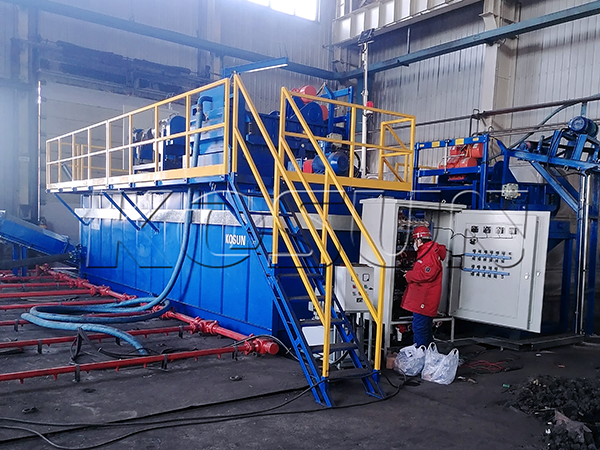
Recently, KOSUN successfully supplied a set of processing system for efficient cleaning of coal slime and slag for Shaanxi Coal Group, and sent it to the customer’s project site to complete the installation and commissioning. This system adopts a modular design concept, which is divided into a sedimentation tank cleaning and dehydration transfer module and a coal slag dehydration transfer module, which can be flexibly increased or decreased function module according to site needs.

Tank Slime Treatment

KOSUN sedimentation tank slime treatment system effectively solves the problems of high solid content in the clear liquid in the sedimentation tank, difficult sewage treatment and high cost; cumbersome coal slime excavation and stacking process in the sedimentation tank, and time-consuming and laborious processing. The solid-phase moisture content after being treated by the KOSUN sedimentation tank slime system is less than 50%, which reduces the stacking volume and floor area, ensures that ordinary muck trucks do not cause secondary pollution when they are transported out, and reduces the amount of liquid entering the sewage treatment station. The total amount and solid content of the phase can be reduced, and the cost of liquid phase treatment can be reduced, not only can the coal slime originally discharged as waste be recycled, but also meet the requirements of national environmental protection and industry standards, and achieve the dual effect of improving economic benefits and environmental protection.

KOSUN has always provided you with solid-liquid separation solutions in the solid waste treatment industry. Customers are welcome to call for consultation!

KOSUN- China Solids Control Leader&Drilling Waste Management Expert
Email: sales2@adkosun.com
WhatsApp/Wechat:+86 18792396268
Contact person: Lily Wang
Online consulting:
http://www.kosun.com
http://www.kosuneco.com

Why is oil sludge sand classified as hazardous waste?

The structural characteristics of oil mud sand in the oil field are particularly complex and diverse, making it very difficult to handle. It is generally composed of structures such as oil-in-water, water-in-oil and suspended solid impurities, and is an extremely stable mixture. The oil components in the sludge sand mainly contain saturated hydrocarbons and aromatic hydrocarbons, and the content of colloid and bitumen is less.

The composition of oil mud sand depends on the geological conditions of the major oil fields, the production technology and the process flow, and is also directly related to the variety of chemicals added, the quality of sewage, and sewage channels. Generally, the moisture content and salt content The amount of ingredients is high. Most of the sludge sands contain harmful substances such as arsenic, mercury, and salts. The characteristics of oily mud sand are mainly high crude oil content, some of which have oil content as high as 50%, high cohesion, and the main binding component of oily mud sand is also crude oil. Oil mud sand dispersed in water will be naturally divided into crude oil floating on the water surface and sand particles sinking to the bottom due to gravity, which mainly depends on the larger component density of oil mud sand. In water, the density of crude oil is lower than that of water.

There is also a big difference in the properties of the old oily sludge sand and the newly produced oily mud sand. The old oily mud sand has a long storage time, so there will be light components diffused during the long-term storage process, while some crude oil is due to the separation of seepage. The physical and chemical reactions of oil sludge will greatly change the properties of oil sludge, and therefore will slowly transform into a mixture of heavy oil, asphaltene, sand and soil.

Based on the above-mentioned structural characteristics, components and properties of oily sludge sand in the oil field, it is explained that the harmful components of oily sludge sand in the oil field are more and more complex, especially in the process of oil production, the addition of various chemicals will increase the toxic components of the oil sludge. These toxic components not only increase the difficulty of separation and purification of the oil sludge, but also more seriously, if the oil is directly discharged , Because the toxic substances are seriously exceeding the standard, the direct and arbitrary discharge will cause serious environmental pollution.

KOSUN- China Solids Control Leader&Drilling Waste Management Expert
Email: sales2@adkosun.com
WhatsApp/Wechat:+86 18792396268
Contact person: Lily Wang
Online consulting:
http://www.kosun.com
http://www.kosuneco.com

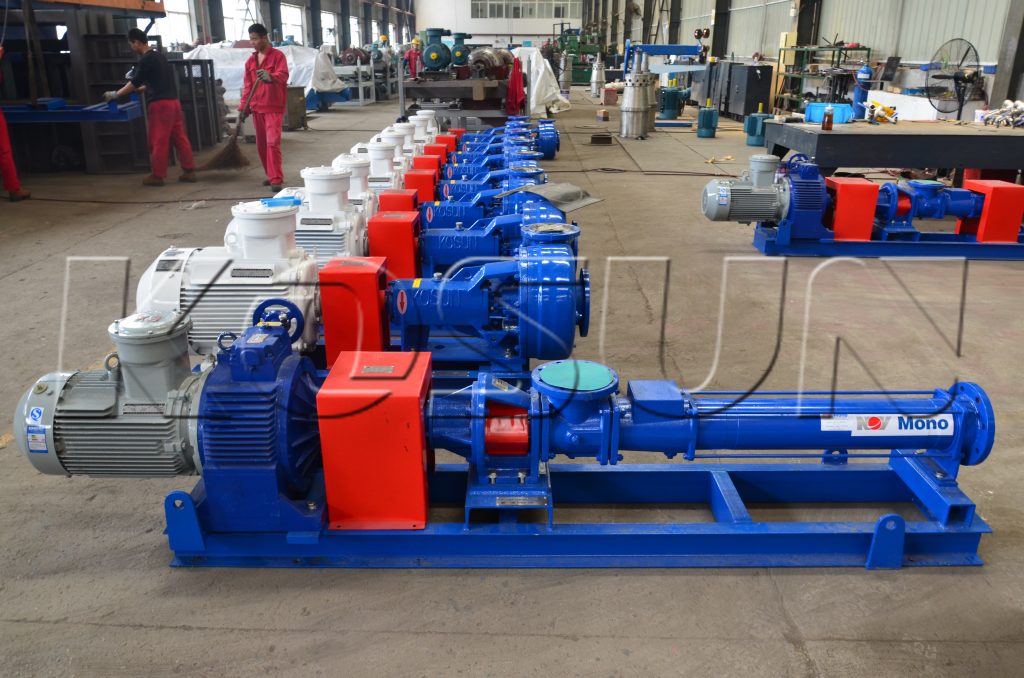
Working principle and characteristics of single screw pump

Single screw pumps have been widely used in developed countries, and most foreign countries call single screw pumps “Monopumps” (MONOPUMPS). Due to its excellent performance, the scope of applications has also been rapidly expanding in recent years. The biggest feature of the pump is strong adaptability to the medium, stable flow, small pressure pulsation, and high self-priming ability, which cannot be replaced by any other pump type.

single screw pump

The single screw pump is a new type of pump that works according to the principle of revolving meshing volumetric type. The main working parts are eccentric screw (rotor) and fixed bushing (stator). Due to the special geometric shapes of the two parts, separate sealed cavities are formed respectively. The medium flows uniformly in the axial direction, the internal flow rate is low, the volume remains unchanged, and the pressure is stable, so there is no vortex and agitation. The output pressure of each stage pump is 0.6MPa, the head is 60m (clear water), and the self-priming height is generally above 6m.

The transmission can be directly driven by a coupling, or variable speed by high-speed motors, V-belts, gearboxes and other devices. G type screw pump has few parts, compact structure, small size, simple maintenance, rotor and stator are the vulnerable parts of the pump, simple structure, easy to assemble and disassemble. Because the stator is made of a variety of elastic materials, this kind of pump has the advantage of conveying high-viscosity fluids and conveying media containing hard suspended particles or media containing fibers that cannot be matched by general pumps. Its flow rate is proportional to the speed.

KOSUN- China Solids Control Leader&Drilling Waste Management Expert
Email: sales2@adkosun.com
WhatsApp/Wechat:+86 18792396268
Contact person: Lily Wang
Online consulting:
http://www.kosun.com
http://www.kosuneco.com

Advantages of KSMR-200 HDD Mud Purification System

Advantages of KSMR-200 HDD Mud Purification System:

The biggest advantages of the Mud Purification System include integrated design, small overall dimensions, small footprint and easier moving. The key technology lies in adopting LS2·752 dual-deck linear shale shaker, which is specially designed and developed for construction conditions with low capacities and rather limited service space. LS2·752 shale shaker can be equipped with two layers of screens with different meshes, desander or desilter, achieving two-stage screening function simultaneously. The benefits like compact structure, small size and light weight allow it to greatly save costs and installation space, and effectively shrink overall dimensions of the mud recovery system.

Parameters of KOSUN KSMR-200 HDD Mud Purification System:

System Capacity: 200GPM (50m³/h)

Particle Size after Treatment: 15~44μm

Processing Stage: two stages

Total System Power: 44kW

Total System Volume: 5m³

External Dimensions of the System: 4000x2360x2940mm

KOSUN KSMR-200 HDD Mud Purification Systems are mainly used in HDD, coalbed methane exploitation and other construction projects with requirements on capacities below 200GPM. The Mud Purification System is also designed with mud preparation devices. After being treated by a dual-deck shaker, add necessary mud materials and stir them evenly to prepare mud with qualified properties for recycling, which can greatly reduce construction costs and effectively protect the environment.

KOSUN- China Solids Control Leader&Drilling Waste Management Expert
Email: sales2@adkosun.com
WhatsApp/Wechat:+86 18792396268
Contact person: Lily Wang
Online consulting:
http://www.kosun.com
http://www.kosuneco.com

Drilling fluid centrifuge is a very important solid phase control equipment

In the drilling solids control system, the drilling fluid centrifuge is a very important solids control equipment. The drilling fluid centrifuge uses the principle of centrifugal sedimentation and separation to separate the suspension in the drilling fluid. It is one of the important equipment in the drilling field to balance the viscosity and specific gravity of the drilling fluid and recover the heavy gold powder in the drilling fluid. KOSUN horizontal spiral unloading sedimentation centrifuge is used for the separation of suspensions containing solid particles with a diameter of ≥2μm, as well as the treatment of drilling mud and liquid. It is particularly effective for oilfield and industrial services, especially in environmentally sensitive areas. The recovery rate is high, the solid phase control is effective, and the cost of mud replenishment and treatment is significantly reduced. This series of centrifuges are equipped with sophisticated dynamic balancing equipment, which can run smoothly for a long time at a speed of 0~3900RPM, and the centrifugal force generated can be as high as 3000G.

The drilling fluid centrifuge is a special equipment for solid-liquid separation. The separation process of the solid and liquid phases in the mud is completed in the drum, and is used to separate the ultrafine solid particles in the drilling fluid. Principle: The drilling fluid centrifuge uses the high-speed rotation of the drum to drive the mud that enters the drum to rotate at a high speed. The mud is thrown on the wall of the drum to form a liquid circle. The solid particles in the liquid circle are hundreds or even thousands of times greater than their own gravity. With the centrifugal force, the drilling fluid centrifuge overcomes the resistance of the mud viscosity and quickly settles on the inner wall of the drum to form a solid phase layer, and the liquid forms a liquid phase layer. The ratio of the centrifugal force of the solid particles in the fluid circle of the drilling centrifuge to its own gravity is called the separation factor of the centrifuge. A centrifuge with a large separation factor can separate finer particles from the mud.

KOSUN- China Solids Control Leader&Drilling Waste Management Expert
Email: sales2@adkosun.com
WhatsApp/Wechat:+86 18792396268
Contact person: Lily Wang
Online consulting:
http://www.kosun.com
http://www.kosuneco.com